Blog

  • New in NetTrack: Net Worth Groups

    New in NetTrack: Net Worth Groups

    We just released a brand new update to NetTrack with some exciting new features.

    📊 Swipeable Net Worth Card
    Your total net worth just got more insightful. Now you can swipe through a redesigned card that breaks down all your assets into Cash, Credit, Investments, and Other categories.

    Each section comes with its own snapshot chart, so you can quickly see trends and spot changes at a glance.

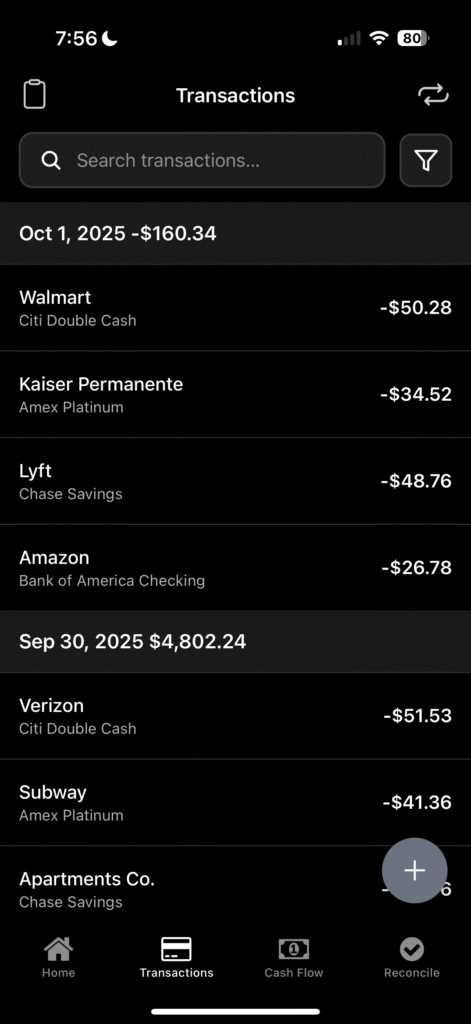
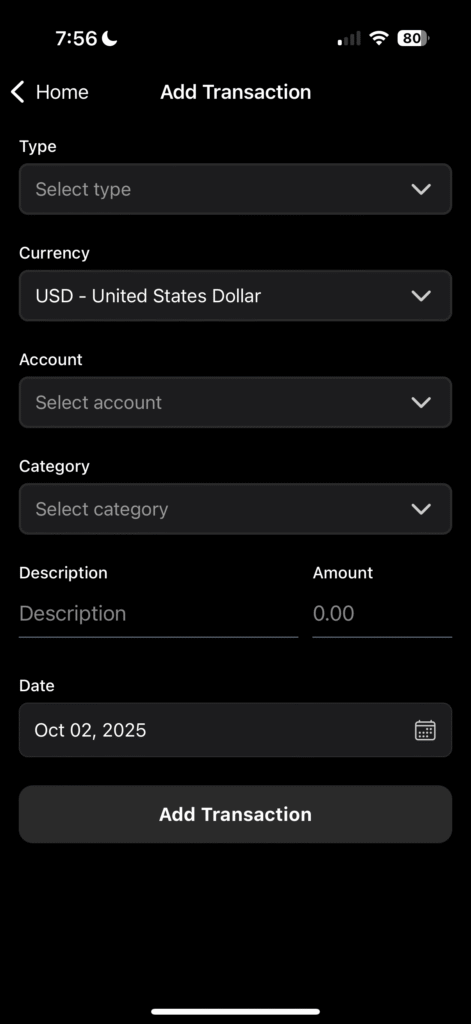
    Quick Add Transactions
    Keeping your accounts up to date is faster than ever. We’ve added a new floating action button (FAB) that lets you add manual transactions on the spot. Whether it’s logging a quick expense or tracking income, you can update your finances in seconds.

    🚀 Try It Out Today
    These updates are live now on iOS, Android. Update your app to explore the new Net Worth view and enjoy a smoother transaction experience.

    As always, we’d love your feedback. Reply to this email and let us know what you think — your input helps shape the future of NetTrack.

  • The Importance of Net Worth Tracking: A Practical Guide

    The Importance of Net Worth Tracking: A Practical Guide

    Imagine a single number that updates as you save, invest, and pay down debt. Net worth tracking does that for you. Yet many people treat it as a final score rather than a compass.

    Net worth is simply what you own minus what you owe, but tracking it regularly turns it into actionable insight. In plain terms, knowing your net worth helps you see where you truly stand, make smarter choices today, and stay focused on your long term financial goals.

    This post explains why tracking matters, how to do it well, and how NetTrack makes the process simple and effective.

    Why net worth tracking matters

    • Clarity and focus: A clear net worth picture shows how your finances move over time, making it easier to decide where to cut costs, accelerate debt payoff, or boost savings.
    • Informed decision making: When you understand the impact of big moves—buying a home, paying for college, or starting a side business—you can choose options that lift your net worth rather than just your monthly lifestyle.
    • Early warning signs: A falling net worth can signal rising debt, market risk, or overlooked expenses. Early visibility helps you course correct before small leaks become big gaps.
    • Motivation and momentum: Seeing progress, even incremental, reinforces positive habits and keeps you aligned with your personal goals rather than chasing a moving scoreboard.

    How to track net worth effectively

    Define net worth clearly

    Net worth equals total assets minus total liabilities. Assets include cash, investments, retirement accounts, real estate equity, vehicles, and other valued possessions. Liabilities cover mortgages, student loans, credit card debt, car loans, and any other obligations. Tracking involves capturing both sides accurately and updating values regularly.

    Gather and value your components

    • Assets: bank balances, investment account balances, retirement accounts, equity in a home, other properties, vehicles, collectibles, and any cash value in life insurance or similar products.
    • Liabilities: outstanding mortgage balance, student loans, credit card balances, auto loans, personal loans.
    • Valuation cadence: update values monthly or quarterly. Real estate and investment values can be synced automatically through a connected platform, while smaller or illiquid assets may require manual updates.

    Use a single, reliable dashboard

    A centralized view reduces guesswork. NetTrack provides a simplified net worth dashboard that aggregates assets and liabilities, tracks historical trends, and surfaces insights at a glance. Consistency in data entry and valuation timing matters more than the exact method of valuation.

    Embrace automation while staying vigilant

    Automating data capture—account connections, automatic balance imports, and valuation updates—saves time and reduces errors. Still, periodically verify data, especially for non cash assets and illiquid holdings, to avoid drift.

    Set realistic targets and review regularly

    Pair your net worth with clear goals, such as building an emergency fund, paying down high interest debt, or saving for a down payment. Review progress on a monthly cadence to detect shifts early and adjust plans accordingly.

    Actionable strategies you can implement now

    • Start with a clean snapshot: List your top assets and liabilities with current balances. Compute a baseline net worth, for example assets 300k minus liabilities 180k equals net worth 120k.
    • Automate what you can: Connect bank accounts and investment accounts to pull balances automatically. Schedule monthly refreshes.
    • Normalize valuations: Use the most recent statements for asset values, and for real estate use a conservative appraisal or broker estimate when needed.
    • Include the full picture: Don’t overlook retirement accounts and other long term assets that contribute to future net worth.
    • Track the trend, not just the number: Look at net worth growth month over month or year over year to gauge progress and volatility.
    • Tie actions to outcomes: If net worth stalls, identify drivers (high interest debt, reduced savings rate, market drops) and set a concrete turnaround plan.

    Common pitfalls and how to avoid them

    • Inconsistent data: Use a single source of truth and a consistent valuation date each period.
    • Overemphasis on home equity: Real estate can be illiquid and volatile. Balance home equity with liquid assets for a true picture.
    • Ignoring retirement accounts: Include retirement balances as they compound, not just when you withdraw.
    • Failing to account for taxes and fees: When evaluating investment returns, consider taxes and investment fees to see true growth.
    • Neglecting debt quality: Differentiate high interest debt from low interest or fixed rate debt and prioritize accordingly.

    How NetTrack supports your net worth journey

    • Centralized, simple dashboard: See all assets and liabilities in one place with a clean, user friendly view.
    • Automatic syncing: Connect your financial accounts to keep numbers current with minimal effort.
    • Historical insights: Track trends over time to understand how your actions impact net worth growth.
    • Scenario planning: Run quick what ifs to visualize how a salary raise, new debt payoff, or a larger savings rate could shift your trajectory.

    A practical 30 day starter plan

    1. Day 1–7: Gather statements for all accounts and list major assets and liabilities.
    2. Day 8–14: Connect accounts to NetTrack and import balances; fill in any manual assets.
    3. Day 15–21: Compute your baseline net worth and set 1–3 realistic short term goals (eg save 5k, pay down 2k in high interest debt).
    4. Day 22–30: Establish a monthly review routine, automate updates, and check one metric besides net worth (savings rate, debt payoff progress).

    Metrics that matter (beyond the net worth number)

    • Net worth trend (monthly/quarterly)
    • Savings rate as a percentage of income
    • Debt payoff progress and interest costs
    • Emergency fund adequacy (how many months of expenses you can cover)
    • Investment return efficiency after fees

    Conclusion: takeaways and next steps

    Tracking net worth is not about vanity metrics or beating others; it is a practical, motion oriented way to connect today’s choices with long term goals. By defining net worth, automating data, and reviewing progress regularly, you gain clarity, confidence, and control over your finances. Start with a simple snapshot, connect your accounts, and use NetTrack to maintain a clean, actionable view. As your data grows, your ability to forecast, adjust, and accelerate toward meaningful financial milestones will follow.

    Key takeaways:

    • Net worth is a dynamic measure of your financial health that improves decision making when tracked consistently.
    • A centralized, automated approach reduces effort and increases accuracy, freeing you to focus on actions that move the needle.
    • Regular reviews and clear goals convert tracking from a chore into a powerful growth tool.

    Next steps:

    • Sign in to NetTrack and connect your primary financial accounts.
    • Create your baseline net worth and set 2–3 short term goals.
    • Schedule a recurring monthly review reminder and start a simple 5 minute habit to update or verify values.
  • Why Net Worth Tracking Matters More Than Budgeting Alone

    Why Net Worth Tracking Matters More Than Budgeting Alone

    Most people are introduced to personal finance through budgeting. We’re told to track expenses, cut down on lattes, and stick to a monthly plan. Budgeting absolutely has value—it helps rein in overspending and builds awareness of habits. But if you stop at budgeting, you’re missing the bigger picture of financial health.

    That’s where net worth tracking comes in. If budgeting is the roadmap, net worth is the destination. If budgeting is the process, net worth is the result. And while budgets can tell you how well you’re doing in a single month, your net worth tells you how well you’re doing in life.


    What Budgeting Actually Tells You

    A budget is simply a plan for how money should flow in and out of your life:

    • Income: your paycheck, side hustles, investment dividends.
    • Expenses: housing, food, transportation, subscriptions, entertainment.

    When you track a budget, you can see:

    • If you’re living within your means.
    • Which categories eat up most of your money.
    • Where you could cut back to save more.

    But here’s the limitation: you can budget perfectly every single month and still not build wealth.

    Example:
    Let’s say you make $5,000 a month and budget $4,500 in expenses. That leaves you $500 “left over.” If you don’t invest it or use it to pay down debt, your net worth barely changes. You’ve budgeted responsibly, but you haven’t grown financially.


    What Net Worth Tracking Reveals

    Your net worth = assets – liabilities.

    • Assets: cash, savings, investments, retirement accounts, real estate, even your car’s value.
    • Liabilities: student loans, mortgages, credit card balances, car loans.

    Tracking your net worth shows whether your financial decisions are actually improving your long-term position.

    Example:

    • Month 1: Assets = $40,000, Liabilities = $30,000 → Net Worth = $10,000.
    • Month 12: Assets = $50,000, Liabilities = $25,000 → Net Worth = $25,000.

    In this case, you grew $15,000 wealthier in a year—even if your monthly budget wasn’t perfect. That’s progress you wouldn’t see from budgeting alone.


    Why Net Worth Is the True Financial Scoreboard

    Think of budgeting as counting calories. It’s useful—it prevents overeating and shows where excess comes from. But counting calories alone won’t tell you if you’re actually healthier. To measure progress, you step on the scale.

    Net worth is the financial scale. It shows your:

    • Debt payoff progress (are balances shrinking?)
    • Savings momentum (are cash reserves growing?)
    • Investment growth (are your assets compounding over time?)

    It’s the single number that represents your overall financial health.


    The Psychology Advantage: Motivation Through Growth

    Budgeting can feel restrictive. Many people quit after a few months because it feels like constant self-denial—“don’t spend here, cut back there.”

    Net worth tracking flips the mindset: instead of focusing on what you can’t do, you’re celebrating what you have achieved.

    • Watching student loans shrink from $40,000 to $30,000 is motivating.
    • Seeing your investments grow by $5,000 in a year creates excitement.
    • Even small monthly increases reinforce the idea that you’re moving forward.

    Progress builds momentum, and momentum keeps people engaged. That’s why so many who abandon budgeting alone stick with net worth tracking.


    Why Budgeting Alone Falls Short

    If you only track a budget, you’re looking at inputs (income and expenses) without seeing the outcome. It’s like studying hard for a class but never checking your grades—you don’t actually know if your effort is working.

    • You might cut expenses but still be underwater if debt grows faster than savings.
    • You might save diligently, but without checking net worth, you won’t see how those savings add up over time.
    • You might even feel “stuck,” because the budget looks the same every month—while your net worth is quietly improving.

    The Power of Combining Both

    The truth is, it’s not budgeting vs. net worth tracking—it’s both working together.

    • Budgeting: controls short-term spending and keeps lifestyle inflation in check.
    • Net Worth Tracking: measures long-term progress and keeps you motivated.

    Together, they give you a complete picture: what you’re doing today and where you’re heading tomorrow.


    Real-Life Example: Two Friends, Two Paths

    • Alex budgets only: Tracks spending, cuts back on takeout, and keeps expenses under control. But Alex doesn’t pay off credit card debt aggressively, and investments sit in cash. After two years, Alex’s net worth barely changes.
    • Jordan tracks net worth: Pays off $10,000 in debt, builds an emergency fund, and invests regularly. Even though Jordan overspends on some months, the net worth steadily climbs. After two years, Jordan has grown $25,000 in wealth.

    The difference? Jordan measured progress with net worth, not just spending.


    Final Thought

    Budgeting is useful—it helps you see where your money goes. But net worth tracking is what proves you’re getting ahead.

    By watching your assets grow and debts shrink, you create a financial feedback loop that’s far more motivating than cutting expenses alone. It turns money management into a long-term game, not a short-term punishment.

    With tools like NetTrack, you don’t need complicated spreadsheets. In just a few clicks, you can see your true financial position—updated automatically every day. That clarity is what makes the difference between feeling stuck and knowing you’re on the path to financial freedom.

  • Emergency Funds: How Much Do You Really Need?

    Emergency Funds: How Much Do You Really Need?

    Life has a way of throwing curveballs—job loss, medical bills, car breakdowns. An emergency fund is your financial safety net when those unexpected expenses hit. But the big question is: how much should you actually save?


    Why an Emergency Fund Matters

    Without an emergency fund, unexpected costs often get covered with credit cards or loans, leading to high-interest debt that drags down your net worth. With one, you buy yourself time, peace of mind, and financial stability.


    The 3–6 Month Rule (and When It’s Not Enough)

    The most common advice: save 3–6 months of essential expenses. That means rent/mortgage, utilities, groceries, insurance, and minimum loan payments.

    But one size doesn’t fit all:

    • Single with no dependents: 3 months may be enough.
    • Dual-income household: 4–6 months for added cushion.
    • Self-employed or variable income: 9–12 months is safer.

    How to Calculate Your Emergency Fund

    1. Add up your monthly essential expenses.
    2. Multiply by the number of months you want covered (e.g., 6 months).
    3. That’s your emergency fund goal.

    Example:

    • Essential expenses = $2,500/month
    • 6 months = $15,000 emergency fund target

    Where to Keep Your Emergency Fund

    • High-Yield Savings Account (HYSA): Safe, liquid, and earns interest.
    • Money Market Account: Slightly higher yield, still accessible.
    • Not Investments: Stocks or crypto can lose value right when you need the money most.

    Building It Step by Step

    Don’t feel overwhelmed if you can’t save the full amount at once.

    • Start with $1,000 as a mini-fund (covers most small emergencies).
    • Automate transfers monthly until you hit your goal.
    • Treat it as non-negotiable—your safety net is priority #1.

    How NetTrack Helps You Stay Prepared

    With NetTrack, your emergency fund isn’t just another savings account—it’s part of your bigger financial picture. You can:

    • See your cash cushion inside your net worth dashboard.
    • Track progress toward your emergency fund goal.
    • Get clarity on how prepared you really are for life’s surprises.

    Takeaway: Your emergency fund is your first line of defense. Whether it’s 3, 6, or 12 months, the key is starting today. Future-you will thank present-you.

  • New in NetTrack: Streamlined Reconciliation

    New in NetTrack: Streamlined Reconciliation

    At NetTrack, we’re always looking for ways to make managing your money simpler and more intuitive. That’s why we’re excited to announce a major update to the Reconciliation experience — designed to help you stay on top of your finances with less effort.


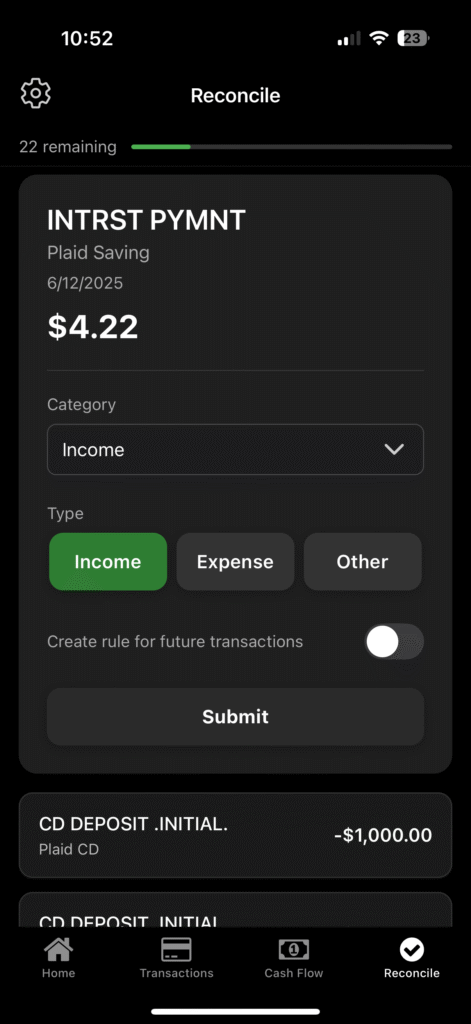
    ✅ Track Your Progress at a Glance

    Reconciling your transactions is now easier than ever. At the top of the screen, you’ll see a progress indicator showing how many transactions remain. This gives you a clear sense of how close you are to completing your review — and adds a little motivation to get to zero.


    📋 Clean List View of All Transactions

    We’ve redesigned reconciliation into a scrollable list view, so you can see all pending transactions in one place. No more bouncing back and forth — now you have a full overview to spot patterns and quickly work through your updates.


    ⚡ Quick Categorization Buttons

    Time is money, so we’ve made it faster to categorize. Each transaction now comes with one-tap buttons for:

    • Income
    • Expense
    • Other

    You can also assign categories with a dropdown and even create rules for future transactions to auto-categorize them. The more you reconcile, the smarter NetTrack gets.


    🚀 Try It Out Today

    The updated Reconciliation screen is now live in the latest version of NetTrack on iOS, Android, and Web. Update your app and see how much smoother your financial reviews can be.

    Be sure to let us know what features or improvements you’d like to see next! We’re always listening – you can simply reply directly to this email.

  • 5 Daily Habits That Will Grow Your Net Worth Over Time

    5 Daily Habits That Will Grow Your Net Worth Over Time

    Building wealth isn’t about luck or guessing the next hot stock. It’s about consistent habits practiced day after day. If you can master a few key financial behaviors and stick with them, your net worth will steadily grow — regardless of market swings or economic cycles.

    In this guide, we’ll cover five daily money habits that can transform your financial future. We’ll also break down common mistakes to avoid, examples of how these habits play out in real life, and why consistency is more powerful than quick wins.


    Why Habits Matter More Than Income

    Most people think net worth growth is all about how much money you make. While income helps, it’s not the full story. There are plenty of high-income earners with little wealth to show because they spend everything (or more) as fast as it comes in.

    On the other hand, people with moderate incomes who build the right habits — tracking, saving, investing, and avoiding lifestyle inflation — often end up wealthier long term.

    👉 The formula is simple:
    Income – Spending + Investing = Growing Net Worth

    The hard part? Sticking to daily habits that keep you moving forward.


    1. Track Your Finances Every Day

    Why It Works

    What gets measured gets managed. By tracking your net worth and spending, you keep money top-of-mind and reduce the chance of overspending blindly.

    Even if it feels small, daily tracking builds financial awareness. You’ll know where your money is going, spot waste, and stay accountable to your long-term goals.

    How to Do It

    • Use automation: Apps like NetTrack connect your accounts and calculate net worth daily so you don’t have to.
    • Spend 2 minutes each morning checking balances and reviewing yesterday’s spending.
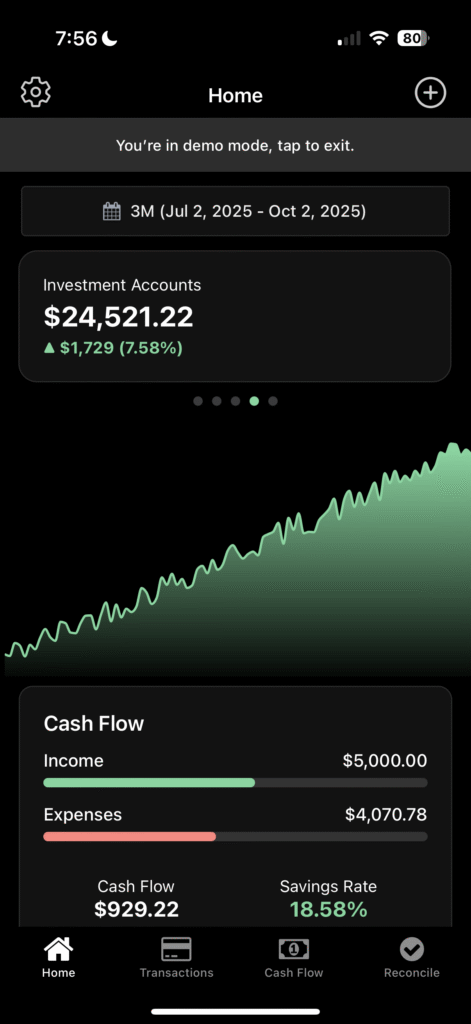
    • Focus on your savings rate — the percentage of income you keep after expenses. This is one of the most powerful wealth indicators.

    Example

    Sarah earns $60,000 a year and saves 20% of her income. By checking NetTrack each morning, she noticed subscriptions she wasn’t using ($40/month). Canceling them added $480/year back into her savings — and she wouldn’t have caught it without tracking.


    2. Spend Less Than You Earn (and Automate It)

    Why It Works

    The gap between income and expenses is the fuel for wealth. The larger the gap, the faster your net worth grows. But discipline is hard — which is why automation is key.

    How to Do It

    • Automate transfers from checking → savings/investing accounts right after payday.
    • Treat savings like a bill: non-negotiable.
    • Use credit cards wisely — pay balances in full to avoid interest, but enjoy rewards if you’re disciplined.

    Mistake to Avoid

    • Thinking you’ll “save what’s left.” Spoiler: There’s rarely anything left. Flip it — save first, then spend the rest.

    Example

    If John automatically invests 15% of each paycheck, he doesn’t have to rely on willpower. Over 10 years, with an average 8% return, that habit alone could grow into six figures.


    3. Invest Consistently (Not Emotionally)

    Why It Works

    Markets are volatile in the short term but reliable in the long term. By investing consistently, you benefit from compounding and dollar-cost averaging — buying more shares when prices are low and fewer when prices are high.

    How to Do It

    • Set up automatic contributions to a retirement account, index fund, or ETF.
    • Start small — even $10–$20/day matters.
    • Focus on time in the market, not timing the market.

    Example

    • Investing $500/month from age 25 to 65 (40 years) with a 10% average return = $3 million+.
    • Waiting just 10 years to start reduces that number to about $1.1 million.

    The habit of starting early and staying consistent is the difference-maker.


    4. Guard Against Lifestyle Inflation

    Why It Works

    As income rises, spending often rises just as fast. This is called lifestyle creep, and it kills wealth.

    The trick is to keep your spending stable while channeling raises and bonuses into savings and investments.

    How to Do It

    • When you get a raise, commit to saving at least half of it.
    • Ask: Does this purchase improve my life, or just my image?
    • Prioritize assets (investments, real estate, business equity) over liabilities (cars, gadgets, fancy clothes).

    Mistake to Avoid

    • Upgrading too quickly (new house, new car, new vacations). Those recurring expenses will eat future raises before you can build wealth.

    5. Review and Reflect Regularly

    Why It Works

    Daily check-ins build awareness, but weekly and monthly reviews drive long-term results. Reflection makes sure your habits are working and keeps motivation high.

    How to Do It

    • Daily: Quick glance at balances/spending.
    • Weekly: Reconcile accounts, categorize expenses, check net worth trends.
    • Monthly: Review goals — debt payoff progress, savings milestones, investment growth.

    Example

    By reflecting weekly, Lisa noticed her dining-out expenses were creeping higher. Cutting back just 20% saved her $150/month — money she redirected into an index fund.


    Common Mistakes That Slow Net Worth Growth

    1. Not starting early — Compounding works best when you give it decades.
    2. Chasing “hot tips” — Emotional investing rarely beats steady index investing.
    3. Ignoring debt — High-interest debt cancels out net worth gains.
    4. Focusing only on income — Raises don’t matter if every dollar gets spent.
    5. Lack of consistency — Sporadic saving and investing never builds momentum.

    FAQs on Daily Money Habits

    Q: Do I really need to check finances every day?
    A: Even 2 minutes daily builds awareness. Over time, it becomes second nature.

    Q: What if I can’t save much right now?
    A: Start small. Even $5/day invested grows over decades. The habit matters more than the amount in the beginning.

    Q: Should I pay off debt or invest first?
    A: Focus on high-interest debt first (credit cards, personal loans). Once that’s under control, split between investing and saving.

    Q: Is tracking net worth really that important?
    A: Yes — it’s the single best way to measure financial progress. Income and savings don’t tell the full story, but net worth does.


    Final Thoughts

    Growing your net worth isn’t about dramatic moves. It’s about small, repeatable habits that compound into something big. Track your finances, spend less than you earn, invest consistently, avoid lifestyle creep, and review regularly.

    If you stick with these habits for years, your future self will thank you.

    💡 Ready to take control of your financial future? NetTrack makes it simple to connect accounts, track net worth automatically, and build momentum with daily insights.

  • Why Tracking Your Net Worth is the Single Best Financial Habit You Can Build

    Why Tracking Your Net Worth is the Single Best Financial Habit You Can Build

    When it comes to money, most people focus on the obvious: budgeting, saving more, or finding the next “hot” investment. While these are important, they miss the foundation of personal finance — tracking your net worth.

    Net worth is your assets (cash, investments, property) minus your liabilities (debt, loans, credit cards). It’s a single number that tells you how well your financial life is really working.

    And here’s the truth: tracking your net worth consistently is the single best financial habit you can build. It doesn’t require complex spreadsheets or hours of planning. Just a few minutes each month can give you a level of clarity and motivation that changes how you handle money forever.

    In this post, we’ll break down why net worth tracking matters, give real-life examples, and show you how it compares to other financial habits.


    1. Net Worth Shows Your True Financial Picture

    You might think you’re doing well if you’re saving $500 a month. But if your debt is growing faster than your savings, your financial health is moving in the wrong direction.

    Example:

    • Sarah earns $70,000 a year and saves $500 monthly into her 401(k). Sounds great, right?
    • But she also has $25,000 in credit card debt growing at 20% interest.

    Without tracking net worth, Sarah feels like she’s making progress. But once she adds it up — her assets ($20k investments + $5k cash) minus liabilities ($25k debt) — she realizes her net worth is negative.


    2. It Motivates Better Money Decisions

    When you measure something, you naturally want to improve it. Seeing your net worth go up, even a little, makes saving and investing addictive in the best way.

    Example:

    • John started tracking his net worth in January 2024 at $15,000.
    • By December, it hit $25,000.
    • That $10,000 gain wasn’t from winning the lottery — it came from making smarter day-to-day choices: paying down a car loan faster, investing monthly, and cutting back on impulse spending.

    3. Accountability: You Can’t Improve What You Don’t Measure

    If you’ve ever tried to lose weight, you know stepping on the scale creates accountability. Tracking net worth works the same way.

    It forces you to face the reality of your finances — the good and the bad. Debt doesn’t stay hidden. Idle savings in a 0.01% bank account stand out. The numbers don’t lie.

    Example:

    • Maria avoided looking at her student loans for years. When she finally started tracking net worth, she set a goal to pay off $5,000 in 12 months.
    • By checking her progress monthly, she hit her goal in 10 months.

    4. Net Worth Helps You Focus on Progress, Not Perfection

    Markets go up and down. Emergencies happen. You won’t win every financial battle. But tracking net worth shifts your focus to the trend line — the long-term trajectory of your financial health.

    Example:

    • In March, Alex’s net worth dipped by $8,000 due to market volatility.
    • But when he looked at the year as a whole, he was still up $18,000.

    That’s the power of zooming out. It prevents panic and reinforces good habits.


    5. It Builds a Habit That Actually Sticks

    Many financial habits fizzle out:

    • Budgeting every dollar? Exhausting.
    • Extreme frugality? Hard to sustain.
    • Side hustles? Easy to burn out.

    But net worth tracking is different. It’s simple, quick, and gives instant feedback. You only need to check it monthly (or quarterly), and the payoff compounds for decades.

    Example:

    • Emily has tracked her net worth for 7 years. She’s watched it grow from $12,000 to $140,000.
    • That habit alone — even without perfect budgeting — kept her consistent through career changes, a move, and market downturns.

    6. Net Worth Tracking vs. Other Habits

    Financial HabitShort-Term ImpactLong-Term ImpactSustainability
    BudgetingHighMediumHard to maintain
    Cutting ExpensesMediumMediumEasy to plateau
    Side HustlesHighDependsRisk of burnout
    Tracking Net WorthLow effortVery HighHighly sustainable

    👉 Net worth tracking is the backbone. You can add budgeting, saving, and investing on top — but without it, you’re flying blind.


    7. How to Start Tracking Your Net Worth

    You don’t need a degree in finance to start. Here’s how:

    1. List your assets — savings, investments, property, retirement accounts.
    2. List your liabilities — credit cards, student loans, mortgage, car loans.
    3. Subtract liabilities from assets — that’s your net worth.
    4. Repeat monthly — track the trend over time.

    Doing this manually is fine, but most people lose momentum. That’s where a net worth tracker app comes in — automating the process, syncing accounts, and giving you a clear dashboard.

    👉 Example: NetTrack automatically connects to your accounts, calculates your savings rate, and shows your progress — without the complexity or bloat of most personal finance apps.


    Final Thoughts

    If you only build one financial habit this year, make it tracking your net worth.

    • It gives you a true snapshot of your finances.
    • It motivates better decisions.
    • It creates accountability.
    • It helps you stay focused on long-term progress.
    • And most importantly, it’s a habit that sticks.

    Wealth isn’t built overnight. It’s built one decision, one month, and one tracked number at a time.

    📈 Start building the habit today with NetTrack — the simple, reliable net worth tracker designed to help you grow wealth without unnecessary complexity.

  • The Average Net Worth by Age in 2025 (And How You Compare)

    The Average Net Worth by Age in 2025 (And How You Compare)

    When it comes to money, most people focus on income. But income alone doesn’t tell the full story. What really matters is how much wealth you keep and grow over time — your net worth.

    Your net worth is the total value of your assets (cash, investments, property, retirement accounts) minus your liabilities (debts, loans, credit cards). Tracking this number is one of the best ways to measure financial progress and long-term stability.

    A common question people ask is: How does my net worth compare to others my age? That’s what we’ll explore here, using the most recent Federal Reserve data adjusted for 2025.


    Average Net Worth by Age in 2025

    The Federal Reserve publishes the Survey of Consumer Finances every three years. The latest numbers, adjusted for inflation into 2025, show how both the median and average net worth break down by age group.

    Age GroupMedian Net WorthAverage Net Worth*
    Under 35$15,000$75,000
    35–44$110,000$430,000
    45–54$250,000$850,000
    55–64$410,000$1,600,000
    65–74$520,000$1,900,000
    75+$330,000$1,600,000

    *Note: The average is skewed upward by a small number of very wealthy households. The median (the middle value) is usually a better benchmark for most people.


    Why These Numbers Matter

    Looking at averages and medians can be eye-opening:

    • If you’re below the median for your age, you’re not alone — but it may be a sign to review spending and debt habits.
    • If you’re near the median, you’re keeping pace with peers, but there’s room to grow.
    • If you’re above average, you’re ahead of the curve — the next challenge is protecting and compounding your wealth.

    Ultimately, these numbers are not about competition. They are a yardstick to help you set goals and track your own trajectory.


    Factors That Influence Net Worth by Age

    Several forces affect why net worth tends to rise with age:

    • Time in the workforce: Older age groups have had decades to save and invest.
    • Homeownership: Equity built through real estate is a major driver of net worth for many households.
    • Debt payoff: Younger groups often carry student loans, credit card debt, or car payments that weigh down their net worth.
    • Compounding investments: Those who invest early see their portfolios grow exponentially over time.

    How to Improve Your Net Worth

    Knowing where you stand is helpful, but the most important step is taking action. Some strategies include:

    1. Reducing high-interest debt as quickly as possible.
    2. Automating savings and investment contributions.
    3. Expanding income streams through career moves or side projects.
    4. Avoiding lifestyle inflation when income rises.
    5. Tracking progress consistently to stay motivated.

    We covered these strategies in detail in our post on 7 Proven Ways to Grow Your Net Worth Faster.


    The Bottom Line

    Comparing your net worth to national averages is a useful benchmark, but what matters most is whether your own number is improving year after year. Building wealth is a long-term process, but consistent tracking and small improvements add up.

    With a tool like NetTrack, you can see your entire financial picture in one place, monitor growth, and make informed decisions that accelerate progress.

  • 7 Proven Ways to Grow Your Net Worth Faster

    7 Proven Ways to Grow Your Net Worth Faster

    Most people focus on income as their main measure of success, but the true indicator of financial health is net worth—what you own minus what you owe. Growing your net worth consistently over time is what leads to financial freedom, not just having a high salary.

    Here are seven proven strategies to build wealth faster and strengthen your financial foundation:


    1. Pay Yourself First

    One of the most powerful financial habits is paying yourself before anyone else. Instead of waiting to see what’s left after expenses, set up automatic transfers into savings or investment accounts as soon as your paycheck arrives. This simple act ensures that wealth building is always a priority. Even a small percentage—10 to 15%—can compound into a life-changing amount over decades. Automation takes the discipline out of the equation and makes growing your net worth effortless.


    2. Avoid Lifestyle Creep

    It’s natural to want to upgrade your lifestyle when your income increases—nicer cars, bigger apartments, more dining out. But every dollar spent on short-term comforts is a dollar not invested in long-term wealth. The key is to maintain a gap between income and expenses that grows as your earnings grow. Keeping lifestyle creep in check allows you to accelerate savings and avoid the trap of feeling “broke” even on a higher salary.


    3. Focus on Assets That Appreciate

    Not all purchases are created equal. Some lose value the moment you buy them, while others increase your wealth over time. Assets like index funds, rental properties, and dividend-paying stocks not only retain their value but also generate income or grow in price. On the other hand, liabilities like cars, gadgets, or luxury items typically depreciate. By consciously directing money toward assets that work for you, you create a financial engine that compounds your net worth year after year.


    4. Eliminate High-Interest Debt Quickly

    Debt isn’t always bad—mortgages or low-interest student loans can be manageable. But high-interest debt, such as credit card balances, is a net worth killer. With rates often exceeding 20%, it compounds against you just as aggressively as investments compound for you. Prioritizing debt repayment is like giving yourself a guaranteed return on investment. Every dollar you pay off is money you no longer lose to interest, freeing up more cash to put toward wealth-building activities.


    5. Track Your Savings Rate

    Your savings rate—the percentage of income you keep after expenses—is one of the best indicators of how quickly you can build wealth. A high income with a low savings rate won’t get you far, but even a modest income with a 20–30% savings rate can transform your future. Tracking your savings rate keeps you accountable and shows whether your financial decisions align with your long-term goals. Over time, improving this percentage—even by a few points—makes a dramatic difference in net worth growth.


    6. Build Multiple Income Streams

    Relying on a single paycheck is risky and slows down wealth building. Creating multiple income streams—whether through side hustles, freelance work, rental income, or dividends—adds security and accelerates growth. Each additional stream gives you more resources to save and invest. Diversifying your income also makes you more resilient against job loss or economic downturns, helping you stay on track no matter what life throws at you.


    7. Monitor Your Net Worth Regularly

    You can’t improve what you don’t measure. Checking your net worth monthly or quarterly helps you see progress, spot warning signs, and stay motivated. A consistent tracking habit keeps you focused on the bigger picture, rather than short-term ups and downs. Many people are surprised to find hidden leaks in their finances—subscriptions they don’t use, debts creeping up, or assets not performing. Regular monitoring keeps your financial health front and center, ensuring steady progress toward your goals.


    Final Thoughts

    Growing your net worth is less about drastic moves and more about consistent habits. Automate savings, control lifestyle inflation, invest in appreciating assets, and track your progress. Over time, these small steps compound into massive results.

    If you want to simplify the tracking part, tools like NetTrack make it easy by automatically updating your accounts, showing your net worth trend, and keeping you accountable without spreadsheets. But whether you use an app or pen and paper, the key is the same: stay consistent and let time do the heavy lifting.

  • NetTrack vs. The Competition: Why Simplicity Wins

    NetTrack vs. The Competition: Why Simplicity Wins

    When it comes to managing your money, the app you choose can make or break your consistency. With dozens of personal finance and net worth tracking tools on the market—like Monarch Money, Rocket Money, YNAB, and Personal Capital—it can be hard to figure out which one actually fits your needs.

    In this post, we’ll compare NetTrack to the competition so you can see what makes it stand out.


    1. Setup and Ease of Use

    • NetTrack: Designed for speed. You can connect your accounts in minutes and immediately see your net worth trend without digging through menus. The interface is clean, focused, and built to reduce overwhelm.
    • Monarch Money / YNAB: Powerful, but require lots of setup. YNAB especially forces you into its budgeting methodology before you can get value.
    • Rocket Money: Quick to set up, but cluttered with ads for bill negotiation and premium upgrades.

    👉 If you want clarity fast, NetTrack wins.


    2. Focus on Net Worth Growth

    • NetTrack: The core of the app is net worth tracking—your accounts, assets, and liabilities in one place. Historical growth, streaks, and insights help you stay consistent and motivated.
    • Competitors: Many apps focus on budgeting or cutting subscriptions (Rocket Money), or act more like a wealth dashboard for investments (Personal Capital). Net worth is often a secondary feature.

    👉 With NetTrack, your financial growth isn’t buried—it’s the headline.


    3. Pricing

    • NetTrack: Just $4.99/month — flat, simple, and affordable. No upsells, no confusing tiers.
    • Competitors:
      • Monarch: ~$14.99/month.
      • YNAB: ~$14.99/month.
      • Rocket Money: “Pay what you want,” but nudges users to $12–$16/month for full features.
      • Personal Capital: Free, but monetized through financial advisor upsells.

    👉 NetTrack gives you all premium features for less than 1/3 of the cost of most alternatives.


    Quick Pricing Comparison

    AppMonthly PriceHidden Upsells?Notes
    NetTrack$4.99❌ NoneAll features included
    Monarch Money$14.99Strong budgeting, but pricey
    YNAB$14.99Forces strict budgeting rules
    Rocket Money$12–$16✅ YesHeavy upsell focus
    Personal CapitalFree✅ YesPushes financial advisor services

    4. Multi-Platform Experience

    • NetTrack: Works seamlessly across iOS, Android, and the web with one consistent experience.
    • Competitors: Most apps do support mobile and web, but performance and usability can vary. YNAB’s web app is strong, but mobile is limited.

    👉 NetTrack is optimized for both on-the-go checks and in-depth desktop reviews.


    5. Who NetTrack Is For

    • Builders who want a clear picture of their financial progress without drowning in budgeting rules.
    • People who value automation and minimal setup.
    • Anyone who wants a fair price for premium tracking.

    If you’re the type who geeks out over complex budgeting categories, YNAB or Monarch might suit you better. But if you want to keep things simple and stay consistent, NetTrack is the better fit.


    Final Thoughts

    Most finance apps try to do everything—budgeting, investing, bill cutting, financial advising. NetTrack takes a different approach: do one thing extremely well—track your net worth—and make it effortless.

    At just $4.99/month, NetTrack is the most affordable way to get a clear, automated view of your financial progress.

    If you’ve been overwhelmed by the competition, give NetTrack a try. Sometimes, simplicity is the real financial superpower.