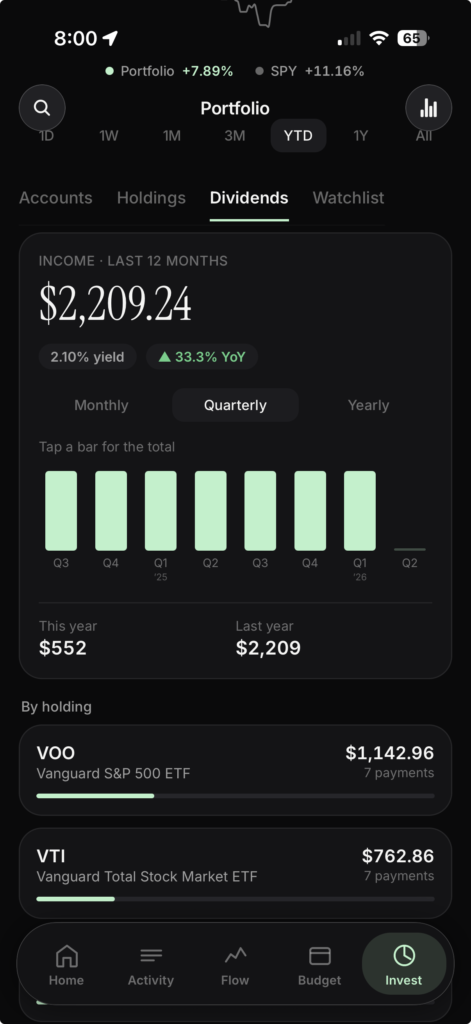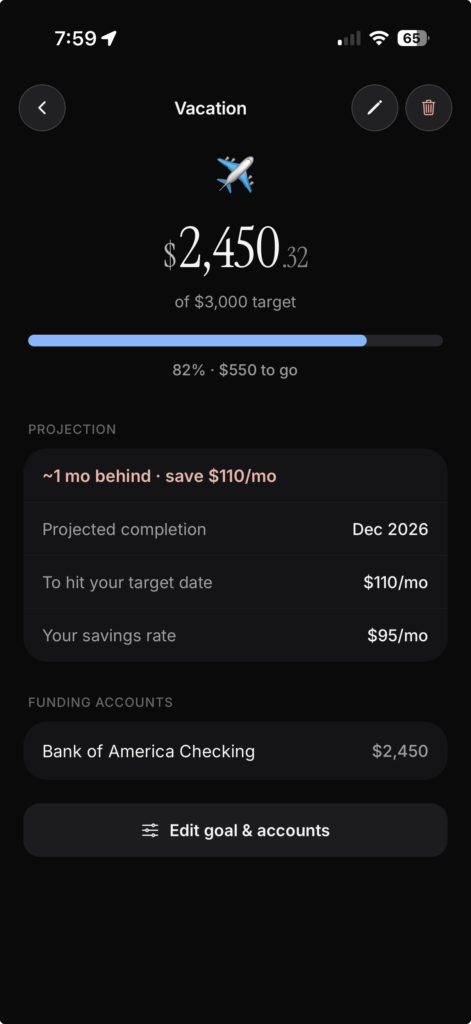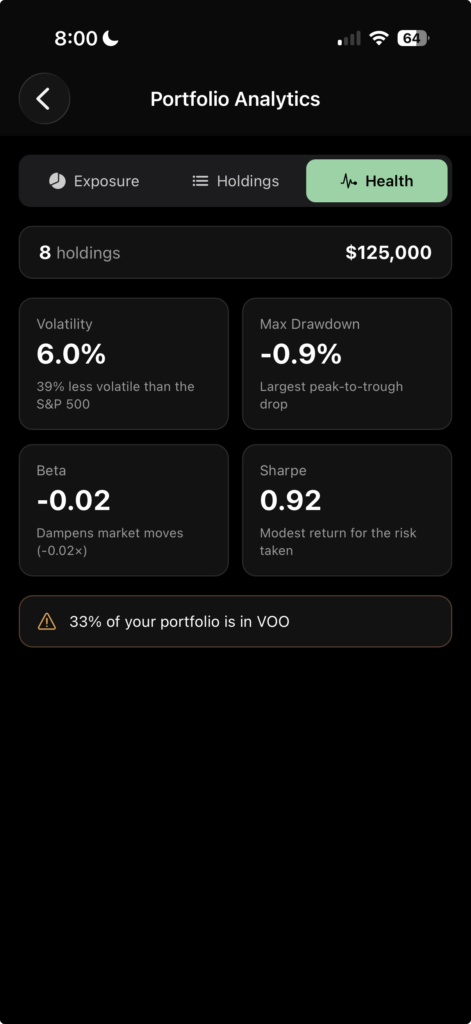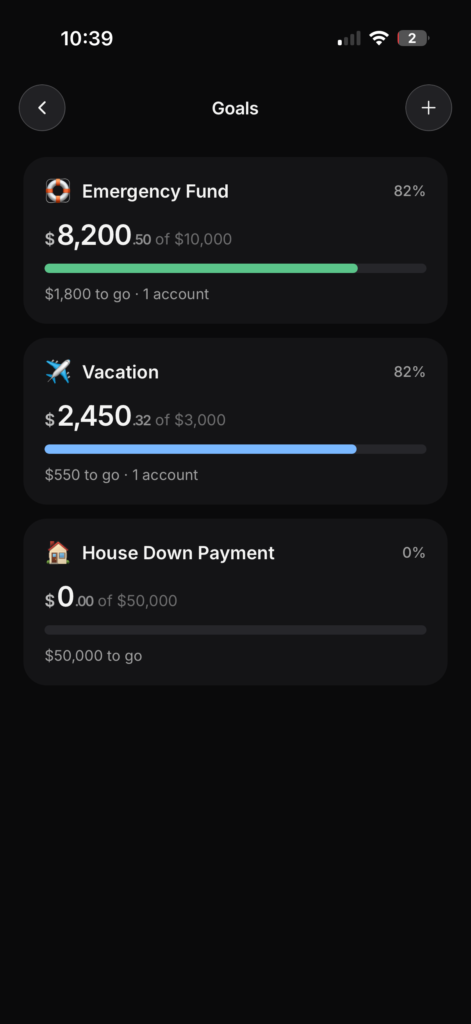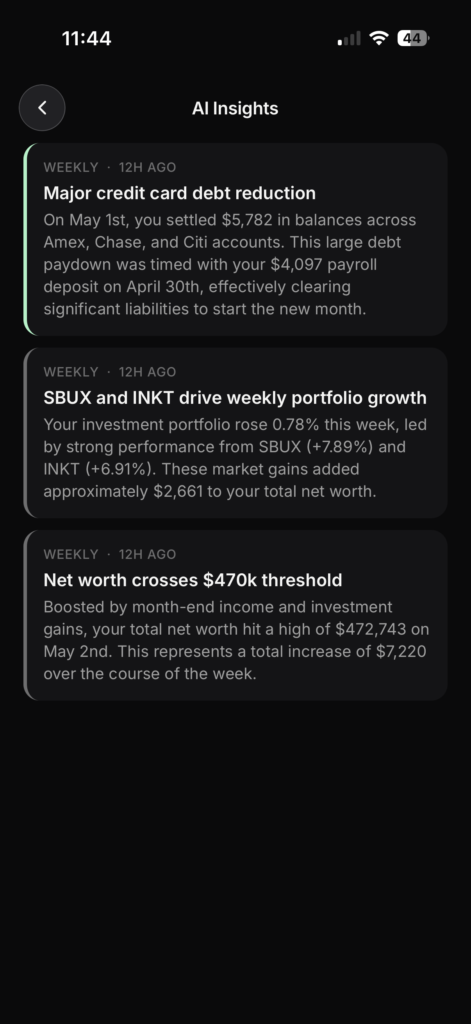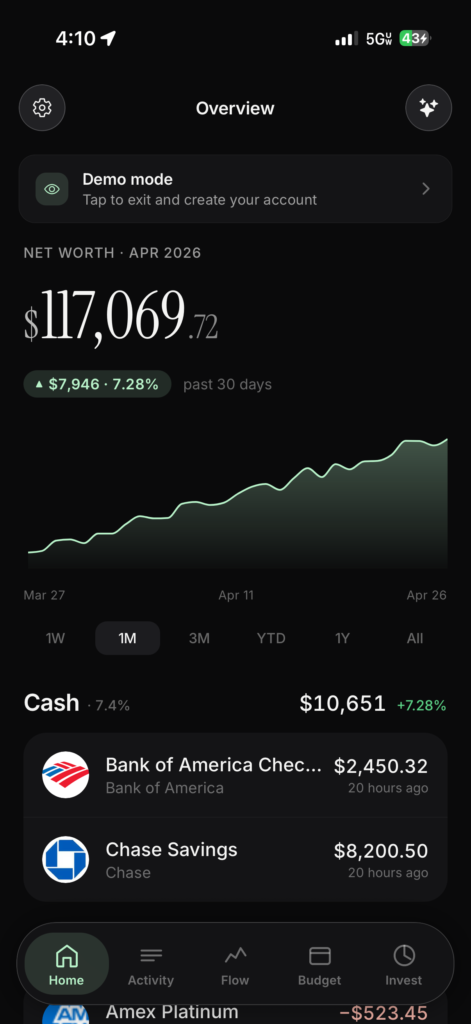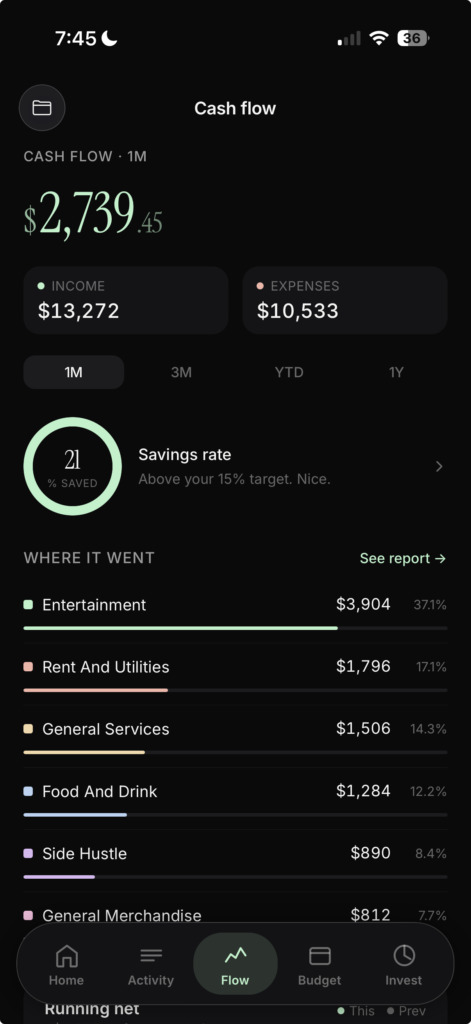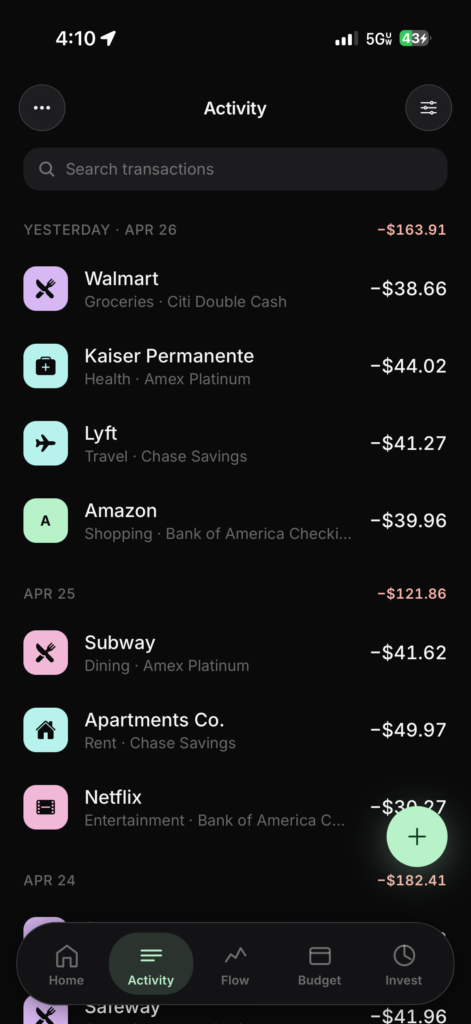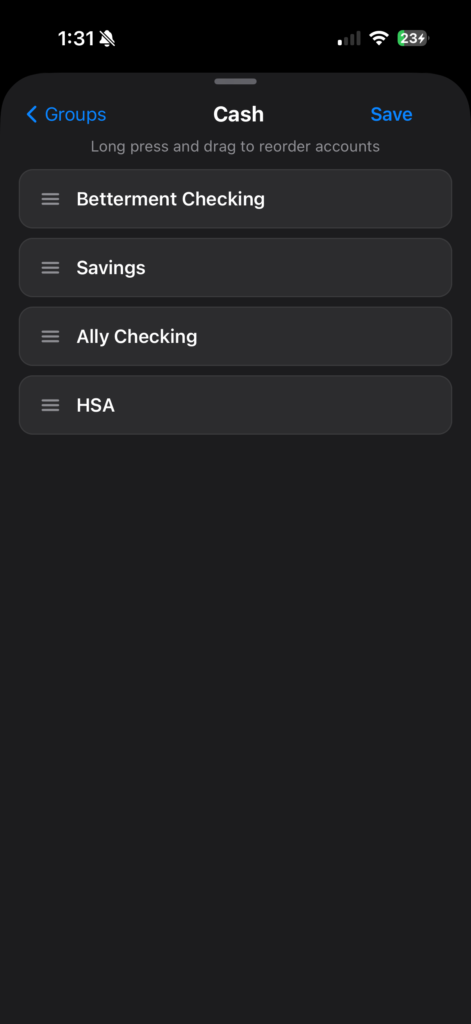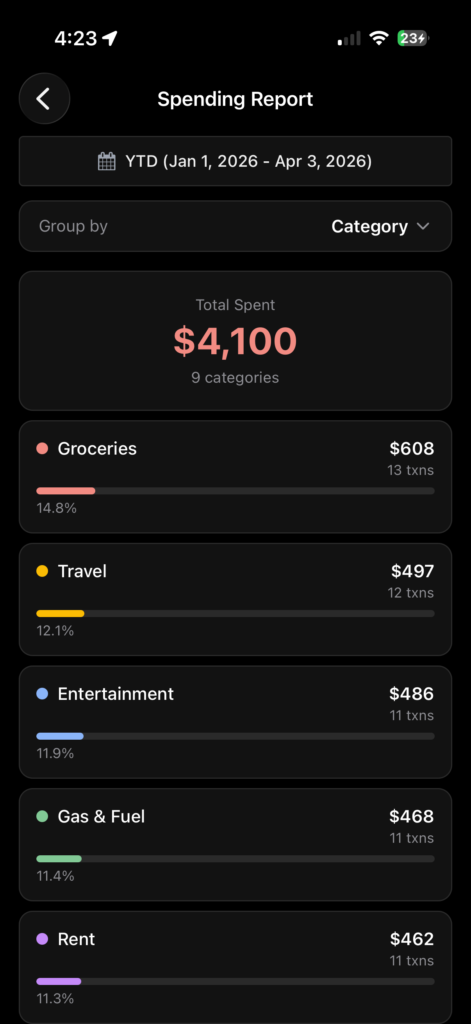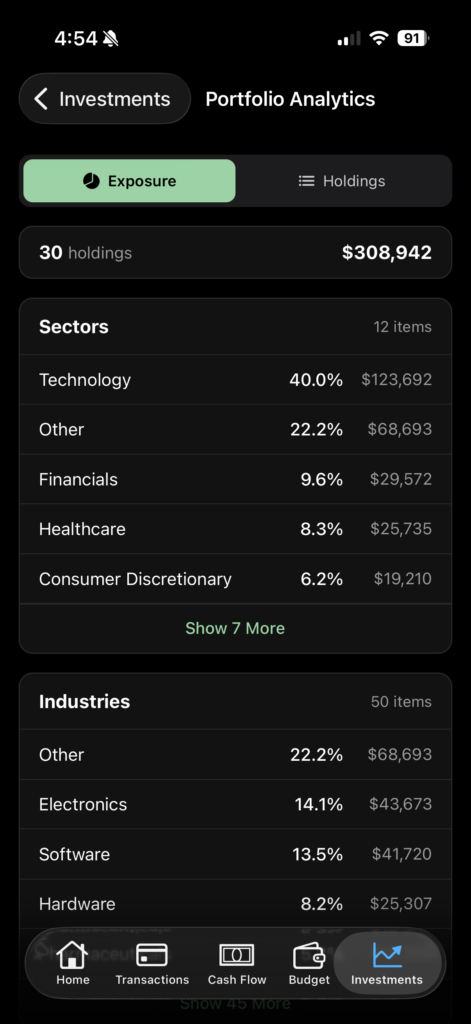
We’re excited to roll out one of our most impactful NetTrack updates yet – focused on expanding coverage, improving investment clarity, and giving you more control over how your financial picture is calculated.
Whether you’re tracking your net worth daily or reviewing long-term investment performance, this release makes NetTrack even more powerful and accurate.
Thousands of New Financial Institutions Now Supported
We’ve significantly expanded our institution coverage with Plaid’s new OAuth-enabled connections. This means:
Thousands of additional banks, credit unions, and fintech platforms are now supported.
Institutions like OnePay and many others can now be linked securely.
More users than ever can seamlessly connect their accounts without manual imports.
If you’ve tried connecting to an institution in the past and it wasn’t supported, try again! There’s a very good chance it is now.
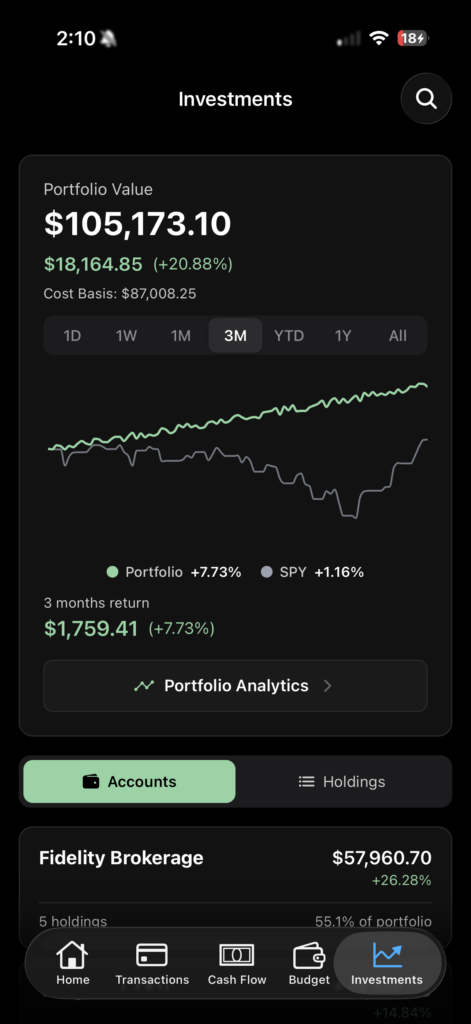
Investment Holdings Now Displayed at the Account Level
Previously, NetTrack grouped your investment holdings at a portfolio-wide level, which made it convenient but sometimes less granular.
Now you can:
View holdings per account instead of just across all accounts.
Compare performance between brokerage accounts, retirement accounts, and taxable portfolios.
Understand where each investment is held and how it contributes to your overall net worth.
This unlocks deeper insight and helps you make more informed decisions.
Manual Overrides for Investment Holdings (Cost Basis, Total Return, Avg. Cost)
Not all financial institutions provide complete or accurate cost-basis data – especially for older holdings or transferred accounts.
So we added something many users asked for:
You can now manually override holding details, including:
Total return
Cost basis
Average cost per share
This ensures that your net worth and performance charts stay accurate, even when your institution’s data is incomplete.
It’s perfect for:
Migrated brokerage accounts
Legacy investments
Correcting bad or missing cost basis
Tracking manually added holdings
What’s Coming Next
Stay tuned – 2026 is going to be huge for NetTrack.
If you haven’t updated the app yet, now’s the perfect time. And as always, thank you for helping shape the future of NetTrack. Your feedback directly drives what we build next.
As always, feel free to reply directly to this email or through the contact form in the app.
We’ve released a new update to NetTrack, focused on improving clarity, usability, and insight into your financial picture. This release introduces two key improvements: a refreshed app icon and a new cash flow trend chart designed to make income and expense patterns easier to understand at a glance.
Updated App Icon
The NetTrack app icon has been refreshed to better represent long-term financial growth and progress. The new design is cleaner, more modern, and fits naturally with current iOS visual styles, especially in dark mode. While subtle, this update improves how the app feels on your home screen and aligns the visual identity more closely with the product’s purpose.
New Income vs. Expenses Trend Chart
The highlight of this release is the new Cash Flow Trend chart. This feature is designed to help you quickly understand how money is moving in and out over time, beyond just tracking balances or net worth totals.
With the new chart, you can:
Compare income versus expenses over time
Switch between weekly and monthly views
See current-period performance alongside a previous period
Identify trends, spikes, or changes in spending behavior
This makes it easier to spot patterns such as rising expenses, inconsistent income, or improving cash flow without needing to dig through individual transactions.
What’s Coming Next
We’ll continue refining visualizations and expanding insights to make NetTrack an even more powerful tool for understanding your finances. As always, feedback helps shape what we build next, and we appreciate everyone using and supporting the app.
If you haven’t already, update to the latest version to check out the new cash flow trend chart and refreshed look.
In the fast-paced world of personal finance, the ability to track investments effectively is crucial for anyone aiming for financial independence. Whether you are a seasoned investor or just starting, understanding your investment portfolio is essential to achieving your long-term financial goals. With NetTrack’s new investment tracking feature, planning your financial future has never been easier.
In this blog post, we will explore the importance of tracking investments, how NetTrack can help simplify this process, and actionable steps to optimize your financial strategy.
Why Tracking Investments Matters
1. Avoid Surprises
One of the greatest risks in investing is the unpredictability of the market. Without careful tracking, you may find yourself blindsided by sudden shifts in your investments. Regularly reviewing your portfolio allows you to stay ahead of these changes, mitigating losses and identifying opportunities before they slip away.
2. Measure Performance
How do you know if your investment strategy is working? Tracking your investments provides the data necessary to evaluate performance, helping you understand which assets are performing well and which may need further scrutiny or adjustment. A clear performance measure is vital for any investor looking to refine their strategy.
3. Goal Alignment
Investments should align with your long-term financial goals—whether that’s buying a home, funding education, or secure retirement. By keeping a close eye on how your portfolio is progressing towards these goals, you can make informed decisions and pivot as necessary.
The Features of NetTrack Investment Tracking
With NetTrack, tracking your investments has become a straightforward process. Let’s delve into some of the core features designed to help you manage your portfolio effectively:
1. Centralized Dashboard
NetTrack simplifies your financial management by providing a centralized dashboard that displays all your investment accounts in one place. This allows you to quickly see how your investments are performing, compare assets, and make informed decisions on adjustments.
2. Real-Time Monitoring
Stay updated with real-time market data. NetTrack integrates seamlessly with different financial institutions, allowing you to track the performance of your assets without having to switch between multiple platforms. Knowledge is power, and with real-time updates, you can react quickly to market fluctuations.
3. Personalized Alerts
Set personalized alerts to notify you of significant changes in your investments. Whether it’s a drop in value, market news, or relevant changes in your investment opportunities, stay informed without the overwhelm.
4. Performance Analytics
Leverage advanced analytics to assess the performance of your investments. Understanding metrics like ROI (Return on Investment), asset allocation, and benchmark comparisons can help you determine whether your investment strategy is effectively working.
Actionable Steps for Effective Investment Tracking
To make the most of your investment tracking journey with NetTrack, follow these actionable steps:
1. Regular Assessments
Schedule regular assessments of your portfolio, ideally on a monthly or quarterly basis. During these reviews, check performance metrics and financial news to remain informed about market trends that may affect your investments.
2. Set Clear Goals
Define your investment objectives clearly. Are you looking for long-term growth, immediate returns, or capital preservation? Understanding your goals will help you structure your portfolio accordingly.
3. Diversification Analysis
Evaluate your investment diversification to ensure you’re not overly exposed to specific market sectors or assets. Diversification can lower risk and improve the potential for return over the long term.
4. Utilize NetTrack’s Features
Take full advantage of NetTrack’s investment tracking features. Set up alerts, use the dashboard for a quick overview, and rely on analytics to gauge your portfolio’s performance regularly.
The Road Ahead: Taking Control of Your Financial Future
Tracking your investments is not just a financial task; it is a fundamental aspect of taking control of your financial future. By integrating consistent tracking into your personal finance routine, you place yourself in a better position to take certain calculated risks, adapt your strategy, and ultimately reach financial independence.
NetTrack provides the tools to simplify this process, allowing you to focus more on your goals rather than the complexities of tracking investments. In a world where financial literacy is paramount, don’t leave your portfolio up to chance—embrace tracking today and set your course towards a prosperous future.
Conclusion
Investment tracking is an indispensable component of personal finance management. With NetTrack’s user-friendly investment tracking capabilities, you can keep your financial goals within reach, measure performance, and optimize your strategy. Start using NetTrack today to simplify your financial journey and make a significant leap towards achieving your net worth aspirations.
Engage with your finances like never before—track your investments with confidence and clarity using NetTrack’s simplified net worth tracker.
Today marks a huge milestone for NetTrack. You asked for powerful investment tracking, deeper insights, and smarter AI support — and this release delivers all of that and more.
Say hello to NetTrack Investments, your new home for viewing, understanding, and analyzing everything you own across all connected investment accounts.
View All Your Investments in the New Investments Tab
With this update, NetTrack now automatically pulls in your holdings from your linked investment accounts — stocks, ETFs, crypto, and more.
You’ll see:
Total portfolio value
Holdings grouped by account
Per-symbol breakdowns
Gain/loss calculations
Allocation & cost basis
Clean, visual summaries built for clarity
No more jumping between apps or spreadsheets. Everything is now centralized, beautifully organized, and refreshed automatically.
Ask AI Chat About Your Investments
NetTrack’s AI Chat just got way smarter.
You can now ask questions like:
“How is my portfolio doing this month?”
“Which of my investments grew the most?”
“What’s my allocation by asset class?”
“How much has my Tesla position gained overall?”
Your AI assistant now understands your holdings data and can break down performance instantly — giving you real insight without the math.
New: Search Inside AI Chat
Big improvement to the chat experience: You can now search inside AI Chat to quickly find past answers, insights, or financial breakdowns.
Useful for:
Jumping back to an analysis you liked
Finding previous monthly summaries
Quickly referencing older conversations
Your financial journey just became easier to navigate.
More to Come
NetTrack Investments is just the beginning. Soon, you’ll get:
Asset-class charts
Country/industry allocation
Insights on diversification and risk
Portfolio trend charts
Head to the App Store and update NetTrack to get these latest updates!
As always, let us know what you think and what you want to see in the future. You can contact us from within the app, or respond directly to this email.
Now you can chat directly with your finances — right inside the NetTrack app.
We’re excited to introduce AI Chat, your new personal finance assistant designed to help you understand your money faster and more naturally than ever before.
What Is AI Chat?
AI Chat lets you have real, conversational interactions with your finances.
Instead of digging through charts or reports, just ask questions in plain English and get instant, personalized answers based on your real data.
Try asking things like:
“What’s my net worth this month?”
“How much did I spend on restaurants last week?”
“What’s my savings rate over the last 3 months?”
“Am I trending up or down compared to last month?”
Within seconds, you’ll get clear insights powered by your actual account data — no spreadsheets required.
Get Started
Update to the latest version of NetTrack next week to start chatting with your money.
Just tap the new AI Chat icon in the app — and ask away.
We’re already working on even smarter financial insights, daily summaries, and proactive suggestions to make managing your money even easier.
We’ve added two highly requested features that make tracking your financial journey even easier — and more motivating than ever.
🏆 1. Highest Net Worth Tracking
NetTrack now keeps track of your highest net worth ever recorded — and celebrates each new milestone you achieve. Whenever your net worth hits a new all-time high, you’ll get a congratulatory notification letting you know you’ve set a new personal record.
It’s a small moment of recognition that helps you see your progress over time and stay motivated to keep growing your wealth.
💡 Tip: You can view your current and highest net worth anytime on the Home screen — complete with your growth percentage and time range.
📅 2. Manage Snapshots
You can now easily view, edit, or delete your account snapshots for any date — right from the new Manage Snapshots screen.
This makes it simple to:
Review all your assets and debts for a specific day
Update balances or categories if something changes
Clean up old or demo data
Whether you’re fine-tuning your historical records or keeping things tidy, snapshot management gives you full control over your financial history.
🌟 Try It Out
These updates are now live in the latest version of NetTrack. Update to the latest version, and head to your Home screen, view your latest snapshot, and see how close you are to hitting your next record high!
We just released a brand new update to NetTrack with some exciting new features.
📊 Swipeable Net Worth Card Your total net worth just got more insightful. Now you can swipe through a redesigned card that breaks down all your assets into Cash, Credit, Investments, and Other categories.
Each section comes with its own snapshot chart, so you can quickly see trends and spot changes at a glance.
➕ Quick Add Transactions Keeping your accounts up to date is faster than ever. We’ve added a new floating action button (FAB) that lets you add manual transactions on the spot. Whether it’s logging a quick expense or tracking income, you can update your finances in seconds.
🚀 Try It Out Today These updates are live now on iOS, Android. Update your app to explore the new Net Worth view and enjoy a smoother transaction experience.
As always, we’d love your feedback. Reply to this email and let us know what you think — your input helps shape the future of NetTrack.
Imagine a single number that updates as you save, invest, and pay down debt. Net worth tracking does that for you. Yet many people treat it as a final score rather than a compass.
Net worth is simply what you own minus what you owe, but tracking it regularly turns it into actionable insight. In plain terms, knowing your net worth helps you see where you truly stand, make smarter choices today, and stay focused on your long term financial goals.
This post explains why tracking matters, how to do it well, and how NetTrack makes the process simple and effective.
Why net worth tracking matters
Clarity and focus: A clear net worth picture shows how your finances move over time, making it easier to decide where to cut costs, accelerate debt payoff, or boost savings.
Informed decision making: When you understand the impact of big moves—buying a home, paying for college, or starting a side business—you can choose options that lift your net worth rather than just your monthly lifestyle.
Early warning signs: A falling net worth can signal rising debt, market risk, or overlooked expenses. Early visibility helps you course correct before small leaks become big gaps.
Motivation and momentum: Seeing progress, even incremental, reinforces positive habits and keeps you aligned with your personal goals rather than chasing a moving scoreboard.
How to track net worth effectively
Define net worth clearly
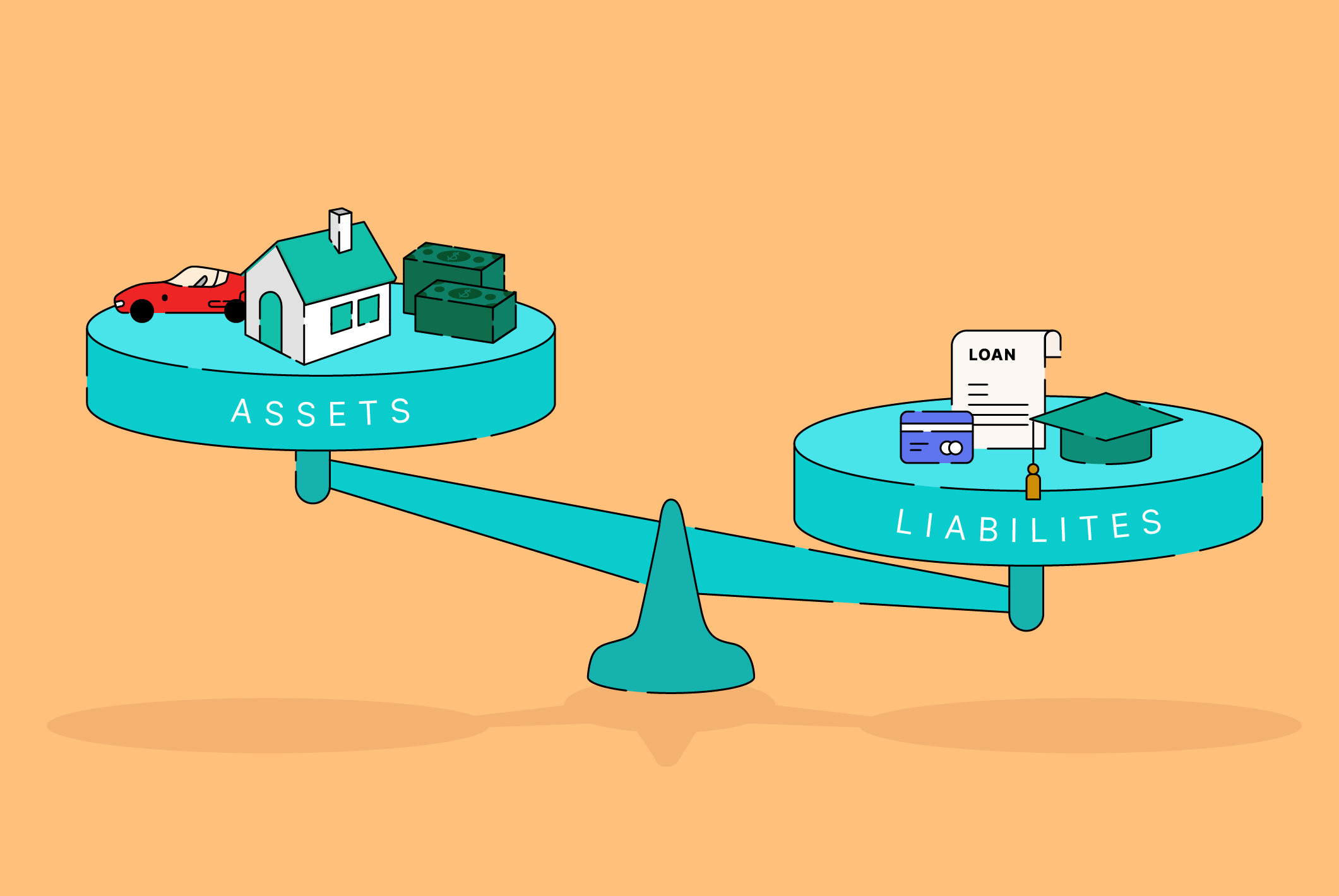
Net worth equals total assets minus total liabilities. Assets include cash, investments, retirement accounts, real estate equity, vehicles, and other valued possessions. Liabilities cover mortgages, student loans, credit card debt, car loans, and any other obligations. Tracking involves capturing both sides accurately and updating values regularly.
Gather and value your components
Assets: bank balances, investment account balances, retirement accounts, equity in a home, other properties, vehicles, collectibles, and any cash value in life insurance or similar products.
Liabilities: outstanding mortgage balance, student loans, credit card balances, auto loans, personal loans.
Valuation cadence: update values monthly or quarterly. Real estate and investment values can be synced automatically through a connected platform, while smaller or illiquid assets may require manual updates.
Use a single, reliable dashboard
A centralized view reduces guesswork. NetTrack provides a simplified net worth dashboard that aggregates assets and liabilities, tracks historical trends, and surfaces insights at a glance. Consistency in data entry and valuation timing matters more than the exact method of valuation.
Embrace automation while staying vigilant
Automating data capture—account connections, automatic balance imports, and valuation updates—saves time and reduces errors. Still, periodically verify data, especially for non cash assets and illiquid holdings, to avoid drift.
Set realistic targets and review regularly
Pair your net worth with clear goals, such as building an emergency fund, paying down high interest debt, or saving for a down payment. Review progress on a monthly cadence to detect shifts early and adjust plans accordingly.
Actionable strategies you can implement now
Start with a clean snapshot: List your top assets and liabilities with current balances. Compute a baseline net worth, for example assets 300k minus liabilities 180k equals net worth 120k.
Automate what you can: Connect bank accounts and investment accounts to pull balances automatically. Schedule monthly refreshes.
Normalize valuations: Use the most recent statements for asset values, and for real estate use a conservative appraisal or broker estimate when needed.
Include the full picture: Don’t overlook retirement accounts and other long term assets that contribute to future net worth.
Track the trend, not just the number: Look at net worth growth month over month or year over year to gauge progress and volatility.
Tie actions to outcomes: If net worth stalls, identify drivers (high interest debt, reduced savings rate, market drops) and set a concrete turnaround plan.
Common pitfalls and how to avoid them
Inconsistent data: Use a single source of truth and a consistent valuation date each period.
Overemphasis on home equity: Real estate can be illiquid and volatile. Balance home equity with liquid assets for a true picture.
Ignoring retirement accounts: Include retirement balances as they compound, not just when you withdraw.
Failing to account for taxes and fees: When evaluating investment returns, consider taxes and investment fees to see true growth.
Neglecting debt quality: Differentiate high interest debt from low interest or fixed rate debt and prioritize accordingly.
How NetTrack supports your net worth journey
Centralized, simple dashboard: See all assets and liabilities in one place with a clean, user friendly view.
Automatic syncing: Connect your financial accounts to keep numbers current with minimal effort.
Historical insights: Track trends over time to understand how your actions impact net worth growth.
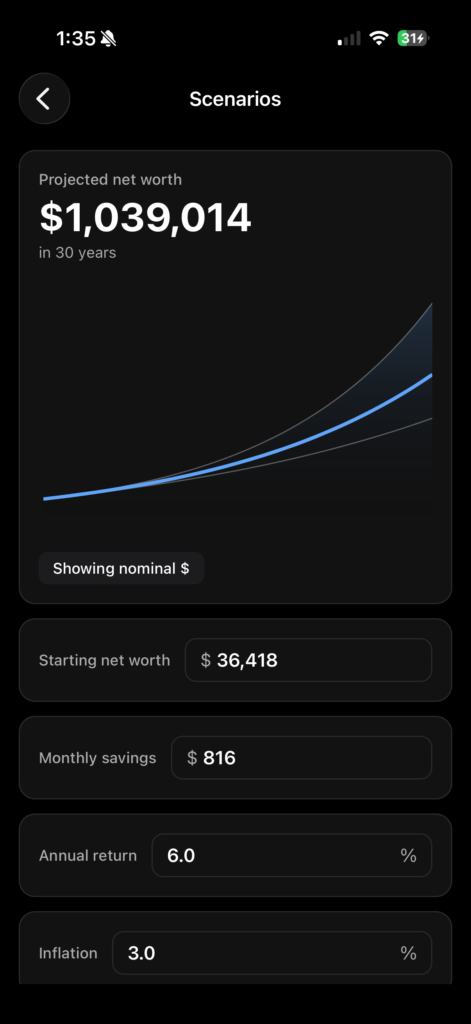
Scenario planning: Run quick what ifs to visualize how a salary raise, new debt payoff, or a larger savings rate could shift your trajectory.
A practical 30 day starter plan
Day 1–7: Gather statements for all accounts and list major assets and liabilities.
Day 8–14: Connect accounts to NetTrack and import balances; fill in any manual assets.
Day 15–21: Compute your baseline net worth and set 1–3 realistic short term goals (eg save 5k, pay down 2k in high interest debt).
Day 22–30: Establish a monthly review routine, automate updates, and check one metric besides net worth (savings rate, debt payoff progress).
Metrics that matter (beyond the net worth number)
Net worth trend (monthly/quarterly)
Savings rate as a percentage of income
Debt payoff progress and interest costs
Emergency fund adequacy (how many months of expenses you can cover)
Investment return efficiency after fees
Conclusion: takeaways and next steps
Tracking net worth is not about vanity metrics or beating others; it is a practical, motion oriented way to connect today’s choices with long term goals. By defining net worth, automating data, and reviewing progress regularly, you gain clarity, confidence, and control over your finances. Start with a simple snapshot, connect your accounts, and use NetTrack to maintain a clean, actionable view. As your data grows, your ability to forecast, adjust, and accelerate toward meaningful financial milestones will follow.
Key takeaways:
Net worth is a dynamic measure of your financial health that improves decision making when tracked consistently.
A centralized, automated approach reduces effort and increases accuracy, freeing you to focus on actions that move the needle.
Regular reviews and clear goals convert tracking from a chore into a powerful growth tool.
Next steps:
Sign in to NetTrack and connect your primary financial accounts.
Create your baseline net worth and set 2–3 short term goals.
Schedule a recurring monthly review reminder and start a simple 5 minute habit to update or verify values.
Most people are introduced to personal finance through budgeting. We’re told to track expenses, cut down on lattes, and stick to a monthly plan. Budgeting absolutely has value—it helps rein in overspending and builds awareness of habits. But if you stop at budgeting, you’re missing the bigger picture of financial health.
That’s where net worth tracking comes in. If budgeting is the roadmap, net worth is the destination. If budgeting is the process, net worth is the result. And while budgets can tell you how well you’re doing in a single month, your net worth tells you how well you’re doing in life.
What Budgeting Actually Tells You
A budget is simply a plan for how money should flow in and out of your life:
Income: your paycheck, side hustles, investment dividends.
But here’s the limitation: you can budget perfectly every single month and still not build wealth.
Example: Let’s say you make $5,000 a month and budget $4,500 in expenses. That leaves you $500 “left over.” If you don’t invest it or use it to pay down debt, your net worth barely changes. You’ve budgeted responsibly, but you haven’t grown financially.
What Net Worth Tracking Reveals
Your net worth = assets – liabilities.
Assets: cash, savings, investments, retirement accounts, real estate, even your car’s value.
Liabilities: student loans, mortgages, credit card balances, car loans.
Tracking your net worth shows whether your financial decisions are actually improving your long-term position.
In this case, you grew $15,000 wealthier in a year—even if your monthly budget wasn’t perfect. That’s progress you wouldn’t see from budgeting alone.
Why Net Worth Is the True Financial Scoreboard
Think of budgeting as counting calories. It’s useful—it prevents overeating and shows where excess comes from. But counting calories alone won’t tell you if you’re actually healthier. To measure progress, you step on the scale.
Net worth is the financial scale. It shows your:
Debt payoff progress (are balances shrinking?)
Savings momentum (are cash reserves growing?)
Investment growth (are your assets compounding over time?)
It’s the single number that represents your overall financial health.
The Psychology Advantage: Motivation Through Growth
Budgeting can feel restrictive. Many people quit after a few months because it feels like constant self-denial—“don’t spend here, cut back there.”
Net worth tracking flips the mindset: instead of focusing on what you can’t do, you’re celebrating what you have achieved.
Watching student loans shrink from $40,000 to $30,000 is motivating.
Seeing your investments grow by $5,000 in a year creates excitement.
Even small monthly increases reinforce the idea that you’re moving forward.
Progress builds momentum, and momentum keeps people engaged. That’s why so many who abandon budgeting alone stick with net worth tracking.
Why Budgeting Alone Falls Short
If you only track a budget, you’re looking at inputs (income and expenses) without seeing the outcome. It’s like studying hard for a class but never checking your grades—you don’t actually know if your effort is working.
You might cut expenses but still be underwater if debt grows faster than savings.
You might save diligently, but without checking net worth, you won’t see how those savings add up over time.
You might even feel “stuck,” because the budget looks the same every month—while your net worth is quietly improving.
The Power of Combining Both
The truth is, it’s not budgeting vs. net worth tracking—it’s both working together.
Budgeting: controls short-term spending and keeps lifestyle inflation in check.
Net Worth Tracking: measures long-term progress and keeps you motivated.
Together, they give you a complete picture: what you’re doing today and where you’re heading tomorrow.
Real-Life Example: Two Friends, Two Paths
Alex budgets only: Tracks spending, cuts back on takeout, and keeps expenses under control. But Alex doesn’t pay off credit card debt aggressively, and investments sit in cash. After two years, Alex’s net worth barely changes.
Jordan tracks net worth: Pays off $10,000 in debt, builds an emergency fund, and invests regularly. Even though Jordan overspends on some months, the net worth steadily climbs. After two years, Jordan has grown $25,000 in wealth.
The difference? Jordan measured progress with net worth, not just spending.
Final Thought
Budgeting is useful—it helps you see where your money goes. But net worth tracking is what proves you’re getting ahead.
By watching your assets grow and debts shrink, you create a financial feedback loop that’s far more motivating than cutting expenses alone. It turns money management into a long-term game, not a short-term punishment.
With tools like NetTrack, you don’t need complicated spreadsheets. In just a few clicks, you can see your true financial position—updated automatically every day. That clarity is what makes the difference between feeling stuck and knowing you’re on the path to financial freedom.
Life has a way of throwing curveballs—job loss, medical bills, car breakdowns. An emergency fund is your financial safety net when those unexpected expenses hit. But the big question is: how much should you actually save?
Why an Emergency Fund Matters
Without an emergency fund, unexpected costs often get covered with credit cards or loans, leading to high-interest debt that drags down your net worth. With one, you buy yourself time, peace of mind, and financial stability.
The 3–6 Month Rule (and When It’s Not Enough)
The most common advice: save 3–6 months of essential expenses. That means rent/mortgage, utilities, groceries, insurance, and minimum loan payments.
But one size doesn’t fit all:
Single with no dependents: 3 months may be enough.
Dual-income household: 4–6 months for added cushion.
Self-employed or variable income: 9–12 months is safer.
How to Calculate Your Emergency Fund
Add up your monthly essential expenses.
Multiply by the number of months you want covered (e.g., 6 months).
That’s your emergency fund goal.
Example:
Essential expenses = $2,500/month
6 months = $15,000 emergency fund target
Where to Keep Your Emergency Fund
High-Yield Savings Account (HYSA): Safe, liquid, and earns interest.
Money Market Account: Slightly higher yield, still accessible.
Not Investments: Stocks or crypto can lose value right when you need the money most.
Building It Step by Step
Don’t feel overwhelmed if you can’t save the full amount at once.
Start with $1,000 as a mini-fund (covers most small emergencies).
Automate transfers monthly until you hit your goal.
Treat it as non-negotiable—your safety net is priority #1.
How NetTrack Helps You Stay Prepared
With NetTrack, your emergency fund isn’t just another savings account—it’s part of your bigger financial picture. You can:
See your cash cushion inside your net worth dashboard.
Track progress toward your emergency fund goal.
Get clarity on how prepared you really are for life’s surprises.
✅ Takeaway: Your emergency fund is your first line of defense. Whether it’s 3, 6, or 12 months, the key is starting today. Future-you will thank present-you.