Category: Savings

  • Emergency Funds: How Much Do You Really Need?

    Emergency Funds: How Much Do You Really Need?

    Life has a way of throwing curveballs—job loss, medical bills, car breakdowns. An emergency fund is your financial safety net when those unexpected expenses hit. But the big question is: how much should you actually save?


    Why an Emergency Fund Matters

    Without an emergency fund, unexpected costs often get covered with credit cards or loans, leading to high-interest debt that drags down your net worth. With one, you buy yourself time, peace of mind, and financial stability.


    The 3–6 Month Rule (and When It’s Not Enough)

    The most common advice: save 3–6 months of essential expenses. That means rent/mortgage, utilities, groceries, insurance, and minimum loan payments.

    But one size doesn’t fit all:

    • Single with no dependents: 3 months may be enough.
    • Dual-income household: 4–6 months for added cushion.
    • Self-employed or variable income: 9–12 months is safer.

    How to Calculate Your Emergency Fund

    1. Add up your monthly essential expenses.
    2. Multiply by the number of months you want covered (e.g., 6 months).
    3. That’s your emergency fund goal.

    Example:

    • Essential expenses = $2,500/month
    • 6 months = $15,000 emergency fund target

    Where to Keep Your Emergency Fund

    • High-Yield Savings Account (HYSA): Safe, liquid, and earns interest.
    • Money Market Account: Slightly higher yield, still accessible.
    • Not Investments: Stocks or crypto can lose value right when you need the money most.

    Building It Step by Step

    Don’t feel overwhelmed if you can’t save the full amount at once.

    • Start with $1,000 as a mini-fund (covers most small emergencies).
    • Automate transfers monthly until you hit your goal.
    • Treat it as non-negotiable—your safety net is priority #1.

    How NetTrack Helps You Stay Prepared

    With NetTrack, your emergency fund isn’t just another savings account—it’s part of your bigger financial picture. You can:

    • See your cash cushion inside your net worth dashboard.
    • Track progress toward your emergency fund goal.
    • Get clarity on how prepared you really are for life’s surprises.

    Takeaway: Your emergency fund is your first line of defense. Whether it’s 3, 6, or 12 months, the key is starting today. Future-you will thank present-you.

  • 5 Daily Habits That Will Grow Your Net Worth Over Time

    5 Daily Habits That Will Grow Your Net Worth Over Time

    Building wealth isn’t about luck or guessing the next hot stock. It’s about consistent habits practiced day after day. If you can master a few key financial behaviors and stick with them, your net worth will steadily grow — regardless of market swings or economic cycles.

    In this guide, we’ll cover five daily money habits that can transform your financial future. We’ll also break down common mistakes to avoid, examples of how these habits play out in real life, and why consistency is more powerful than quick wins.


    Why Habits Matter More Than Income

    Most people think net worth growth is all about how much money you make. While income helps, it’s not the full story. There are plenty of high-income earners with little wealth to show because they spend everything (or more) as fast as it comes in.

    On the other hand, people with moderate incomes who build the right habits — tracking, saving, investing, and avoiding lifestyle inflation — often end up wealthier long term.

    👉 The formula is simple:
    Income – Spending + Investing = Growing Net Worth

    The hard part? Sticking to daily habits that keep you moving forward.


    1. Track Your Finances Every Day

    Why It Works

    What gets measured gets managed. By tracking your net worth and spending, you keep money top-of-mind and reduce the chance of overspending blindly.

    Even if it feels small, daily tracking builds financial awareness. You’ll know where your money is going, spot waste, and stay accountable to your long-term goals.

    How to Do It

    • Use automation: Apps like NetTrack connect your accounts and calculate net worth daily so you don’t have to.
    • Spend 2 minutes each morning checking balances and reviewing yesterday’s spending.
    • Focus on your savings rate — the percentage of income you keep after expenses. This is one of the most powerful wealth indicators.

    Example

    Sarah earns $60,000 a year and saves 20% of her income. By checking NetTrack each morning, she noticed subscriptions she wasn’t using ($40/month). Canceling them added $480/year back into her savings — and she wouldn’t have caught it without tracking.


    2. Spend Less Than You Earn (and Automate It)

    Why It Works

    The gap between income and expenses is the fuel for wealth. The larger the gap, the faster your net worth grows. But discipline is hard — which is why automation is key.

    How to Do It

    • Automate transfers from checking → savings/investing accounts right after payday.
    • Treat savings like a bill: non-negotiable.
    • Use credit cards wisely — pay balances in full to avoid interest, but enjoy rewards if you’re disciplined.

    Mistake to Avoid

    • Thinking you’ll “save what’s left.” Spoiler: There’s rarely anything left. Flip it — save first, then spend the rest.

    Example

    If John automatically invests 15% of each paycheck, he doesn’t have to rely on willpower. Over 10 years, with an average 8% return, that habit alone could grow into six figures.


    3. Invest Consistently (Not Emotionally)

    Why It Works

    Markets are volatile in the short term but reliable in the long term. By investing consistently, you benefit from compounding and dollar-cost averaging — buying more shares when prices are low and fewer when prices are high.

    How to Do It

    • Set up automatic contributions to a retirement account, index fund, or ETF.
    • Start small — even $10–$20/day matters.
    • Focus on time in the market, not timing the market.

    Example

    • Investing $500/month from age 25 to 65 (40 years) with a 10% average return = $3 million+.
    • Waiting just 10 years to start reduces that number to about $1.1 million.

    The habit of starting early and staying consistent is the difference-maker.


    4. Guard Against Lifestyle Inflation

    Why It Works

    As income rises, spending often rises just as fast. This is called lifestyle creep, and it kills wealth.

    The trick is to keep your spending stable while channeling raises and bonuses into savings and investments.

    How to Do It

    • When you get a raise, commit to saving at least half of it.
    • Ask: Does this purchase improve my life, or just my image?
    • Prioritize assets (investments, real estate, business equity) over liabilities (cars, gadgets, fancy clothes).

    Mistake to Avoid

    • Upgrading too quickly (new house, new car, new vacations). Those recurring expenses will eat future raises before you can build wealth.

    5. Review and Reflect Regularly

    Why It Works

    Daily check-ins build awareness, but weekly and monthly reviews drive long-term results. Reflection makes sure your habits are working and keeps motivation high.

    How to Do It

    • Daily: Quick glance at balances/spending.
    • Weekly: Reconcile accounts, categorize expenses, check net worth trends.
    • Monthly: Review goals — debt payoff progress, savings milestones, investment growth.

    Example

    By reflecting weekly, Lisa noticed her dining-out expenses were creeping higher. Cutting back just 20% saved her $150/month — money she redirected into an index fund.


    Common Mistakes That Slow Net Worth Growth

    1. Not starting early — Compounding works best when you give it decades.
    2. Chasing “hot tips” — Emotional investing rarely beats steady index investing.
    3. Ignoring debt — High-interest debt cancels out net worth gains.
    4. Focusing only on income — Raises don’t matter if every dollar gets spent.
    5. Lack of consistency — Sporadic saving and investing never builds momentum.

    FAQs on Daily Money Habits

    Q: Do I really need to check finances every day?
    A: Even 2 minutes daily builds awareness. Over time, it becomes second nature.

    Q: What if I can’t save much right now?
    A: Start small. Even $5/day invested grows over decades. The habit matters more than the amount in the beginning.

    Q: Should I pay off debt or invest first?
    A: Focus on high-interest debt first (credit cards, personal loans). Once that’s under control, split between investing and saving.

    Q: Is tracking net worth really that important?
    A: Yes — it’s the single best way to measure financial progress. Income and savings don’t tell the full story, but net worth does.


    Final Thoughts

    Growing your net worth isn’t about dramatic moves. It’s about small, repeatable habits that compound into something big. Track your finances, spend less than you earn, invest consistently, avoid lifestyle creep, and review regularly.

    If you stick with these habits for years, your future self will thank you.

    💡 Ready to take control of your financial future? NetTrack makes it simple to connect accounts, track net worth automatically, and build momentum with daily insights.


  • The Average Net Worth by Age in 2025 (And How You Compare)

    The Average Net Worth by Age in 2025 (And How You Compare)

    When it comes to money, most people focus on income. But income alone doesn’t tell the full story. What really matters is how much wealth you keep and grow over time — your net worth.

    Your net worth is the total value of your assets (cash, investments, property, retirement accounts) minus your liabilities (debts, loans, credit cards). Tracking this number is one of the best ways to measure financial progress and long-term stability.

    A common question people ask is: How does my net worth compare to others my age? That’s what we’ll explore here, using the most recent Federal Reserve data adjusted for 2025.


    Average Net Worth by Age in 2025

    The Federal Reserve publishes the Survey of Consumer Finances every three years. The latest numbers, adjusted for inflation into 2025, show how both the median and average net worth break down by age group.

    Age GroupMedian Net WorthAverage Net Worth*
    Under 35$15,000$75,000
    35–44$110,000$430,000
    45–54$250,000$850,000
    55–64$410,000$1,600,000
    65–74$520,000$1,900,000
    75+$330,000$1,600,000

    *Note: The average is skewed upward by a small number of very wealthy households. The median (the middle value) is usually a better benchmark for most people.


    Why These Numbers Matter

    Looking at averages and medians can be eye-opening:

    • If you’re below the median for your age, you’re not alone — but it may be a sign to review spending and debt habits.
    • If you’re near the median, you’re keeping pace with peers, but there’s room to grow.
    • If you’re above average, you’re ahead of the curve — the next challenge is protecting and compounding your wealth.

    Ultimately, these numbers are not about competition. They are a yardstick to help you set goals and track your own trajectory.


    Factors That Influence Net Worth by Age

    Several forces affect why net worth tends to rise with age:

    • Time in the workforce: Older age groups have had decades to save and invest.
    • Homeownership: Equity built through real estate is a major driver of net worth for many households.
    • Debt payoff: Younger groups often carry student loans, credit card debt, or car payments that weigh down their net worth.
    • Compounding investments: Those who invest early see their portfolios grow exponentially over time.

    How to Improve Your Net Worth

    Knowing where you stand is helpful, but the most important step is taking action. Some strategies include:

    1. Reducing high-interest debt as quickly as possible.
    2. Automating savings and investment contributions.
    3. Expanding income streams through career moves or side projects.
    4. Avoiding lifestyle inflation when income rises.
    5. Tracking progress consistently to stay motivated.

    We covered these strategies in detail in our post on 7 Proven Ways to Grow Your Net Worth Faster.


    The Bottom Line

    Comparing your net worth to national averages is a useful benchmark, but what matters most is whether your own number is improving year after year. Building wealth is a long-term process, but consistent tracking and small improvements add up.

    With a tool like NetTrack, you can see your entire financial picture in one place, monitor growth, and make informed decisions that accelerate progress.

  • 7 Proven Ways to Grow Your Net Worth Faster

    7 Proven Ways to Grow Your Net Worth Faster

    Most people focus on income as their main measure of success, but the true indicator of financial health is net worth—what you own minus what you owe. Growing your net worth consistently over time is what leads to financial freedom, not just having a high salary.

    Here are seven proven strategies to build wealth faster and strengthen your financial foundation:


    1. Pay Yourself First

    One of the most powerful financial habits is paying yourself before anyone else. Instead of waiting to see what’s left after expenses, set up automatic transfers into savings or investment accounts as soon as your paycheck arrives. This simple act ensures that wealth building is always a priority. Even a small percentage—10 to 15%—can compound into a life-changing amount over decades. Automation takes the discipline out of the equation and makes growing your net worth effortless.


    2. Avoid Lifestyle Creep

    It’s natural to want to upgrade your lifestyle when your income increases—nicer cars, bigger apartments, more dining out. But every dollar spent on short-term comforts is a dollar not invested in long-term wealth. The key is to maintain a gap between income and expenses that grows as your earnings grow. Keeping lifestyle creep in check allows you to accelerate savings and avoid the trap of feeling “broke” even on a higher salary.


    3. Focus on Assets That Appreciate

    Not all purchases are created equal. Some lose value the moment you buy them, while others increase your wealth over time. Assets like index funds, rental properties, and dividend-paying stocks not only retain their value but also generate income or grow in price. On the other hand, liabilities like cars, gadgets, or luxury items typically depreciate. By consciously directing money toward assets that work for you, you create a financial engine that compounds your net worth year after year.


    4. Eliminate High-Interest Debt Quickly

    Debt isn’t always bad—mortgages or low-interest student loans can be manageable. But high-interest debt, such as credit card balances, is a net worth killer. With rates often exceeding 20%, it compounds against you just as aggressively as investments compound for you. Prioritizing debt repayment is like giving yourself a guaranteed return on investment. Every dollar you pay off is money you no longer lose to interest, freeing up more cash to put toward wealth-building activities.


    5. Track Your Savings Rate

    Your savings rate—the percentage of income you keep after expenses—is one of the best indicators of how quickly you can build wealth. A high income with a low savings rate won’t get you far, but even a modest income with a 20–30% savings rate can transform your future. Tracking your savings rate keeps you accountable and shows whether your financial decisions align with your long-term goals. Over time, improving this percentage—even by a few points—makes a dramatic difference in net worth growth.


    6. Build Multiple Income Streams

    Relying on a single paycheck is risky and slows down wealth building. Creating multiple income streams—whether through side hustles, freelance work, rental income, or dividends—adds security and accelerates growth. Each additional stream gives you more resources to save and invest. Diversifying your income also makes you more resilient against job loss or economic downturns, helping you stay on track no matter what life throws at you.


    7. Monitor Your Net Worth Regularly

    You can’t improve what you don’t measure. Checking your net worth monthly or quarterly helps you see progress, spot warning signs, and stay motivated. A consistent tracking habit keeps you focused on the bigger picture, rather than short-term ups and downs. Many people are surprised to find hidden leaks in their finances—subscriptions they don’t use, debts creeping up, or assets not performing. Regular monitoring keeps your financial health front and center, ensuring steady progress toward your goals.


    Final Thoughts

    Growing your net worth is less about drastic moves and more about consistent habits. Automate savings, control lifestyle inflation, invest in appreciating assets, and track your progress. Over time, these small steps compound into massive results.

    If you want to simplify the tracking part, tools like NetTrack make it easy by automatically updating your accounts, showing your net worth trend, and keeping you accountable without spreadsheets. But whether you use an app or pen and paper, the key is the same: stay consistent and let time do the heavy lifting.

  • Net Worth vs. Income: Why High Earners Still Go Broke

    Net Worth vs. Income: Why High Earners Still Go Broke

    The Salary Trap

    Making six figures should mean you’re financially secure… right? Not necessarily. Across the U.S., there are high-income earners living paycheck to paycheck, stressed about money despite big salaries.

    The problem? Confusing income with wealth.

    Income is what you earn. Net worth is what you keep. And if your lifestyle inflates with your paycheck, you can easily end up broke—no matter how much you make.


    Net Worth vs. Income: The Key Difference

    Net worth = assets – liabilities
    Income = money earned during a set time period

    • Income: The money you earn from your job, business, or investments each year.
    • Net Worth: The total value of everything you own (cash, investments, property) minus everything you owe (mortgages, loans, credit cards).

    📚 Learn how to track your net worth weekly for better financial awareness.

    Someone earning $250K but spending $260K each year has a negative net worth—and is technically poorer than someone earning $60K but saving $15K annually.


    Why High Earners Go Broke

    1. Lifestyle Inflation
      Bigger salaries often lead to bigger houses, luxury cars, and expensive vacations—none of which grow your wealth.
      👉 More on avoiding lifestyle creep.
    2. Debt Creep
      High earners sometimes borrow more because they “can afford it,” but compound interest works against you just as fast as it works for you in investing.
    3. Lack of Tracking
      If you don’t track your assets and liabilities, you may not notice your net worth stalling—or shrinking—until it’s too late.
    4. Overconfidence
      A large paycheck can create a false sense of security, masking poor money habits.

    Why Net Worth Is the Real Scoreboard

    Net worth tells the whole story. It accounts for your savings rate, debt load, investments, and how well you’re building assets over time.

    Tracking net worth helps you:

    • See your true financial position
    • Catch warning signs early (like rising debt)
    • Stay motivated by visualizing progress
    • Make better spending and investing decisions

    📈 Discover the hidden power of tracking your savings rate.


    How to Avoid the High-Income Broke Trap

    1. Track Your Net Worth Regularly
      Use an app like NetTrack to see your assets, liabilities, and overall financial health in one place.
    2. Control Lifestyle Inflation
      As income grows, keep your spending growth slower than your salary growth.
    3. Prioritize Savings Rate
      Aim to save and invest at least 20–30% of your income—more if you want to reach financial independence faster.
    4. Pay Down Debt Aggressively
      Even small interest rates eat away at wealth over time.

    FAQs: Net Worth vs. Income

    Q: Which is more important—income or net worth?
    A: Both matter, but net worth is the better measure of long-term financial stability because it shows what you actually keep after expenses and debt.

    Q: Can you have a high income and still have a low net worth?
    A: Yes. Without saving and investing, you can earn a lot but own very little.

    Q: How often should I check my net worth?
    A: At least monthly. Many NetTrack users track it weekly for faster course corrections.


    The Bottom Line

    Income is important—but net worth is what really determines financial freedom. Without tracking it, you could be earning more than ever and still slipping backward.

    📱 Start tracking your net worth with NetTrack today—free on iOS, Android, and the web—and make sure your income is building lasting wealth.

  • The Hidden Power of Tracking Your Savings Rate (And Why Most People Ignore It)

    The Hidden Power of Tracking Your Savings Rate (And Why Most People Ignore It)

    When people think about managing their finances, they usually focus on two things: budgeting and spending. But there’s one metric that’s even more important—yet often overlooked: your savings rate.

    Your savings rate tells you how much of your income you’re actually keeping. And unlike your budget, which is a plan, your savings rate reflects what’s really happening.

    What Is a Savings Rate?

    Your savings rate is the percentage of your income that you don’t spend. It’s calculated like this:

    Savings Rate = (Income – Expenses) / Income

    For example, if you earn $5,000/month and spend $4,000, your savings rate is 20%.

    Why does this matter? Because the higher your savings rate, the faster you build wealth and the more flexibility you have in life. It’s the clearest indicator of financial momentum.

    Why Most People Ignore It

    There are a few reasons why most people don’t track their savings rate:

    • They don’t know how
    • It sounds complicated
    • They assume if their bank balance isn’t negative, they’re doing okay

    But here’s the truth: if you don’t track it, you can’t improve it.

    Why Tracking Your Savings Rate Beats Budgeting

    Budgets are helpful—but they’re also aspirational. A savings rate, on the other hand, is grounded in reality.

    • Budget: What you plan to do
    • Savings rate: What you actually did

    That’s a big difference.

    Tracking your savings rate shows you whether your financial plan is working. It holds you accountable and helps you course-correct quickly if things go off track.

    How NetTrack Makes It Easy

    NetTrack automatically calculates your savings rate by connecting to your real income and expense data. You don’t need spreadsheets or formulas. Just link your accounts and go.

    With NetTrack, you’ll see:

    • Monthly savings rate trends
    • Year-to-date savings performance
    • How changes in income or spending affect your trajectory

    This insight is powerful. It helps you make smarter decisions with confidence.

    What’s a Good Savings Rate?

    There’s no one-size-fits-all answer, but here are some general benchmarks:

    • 10% – Minimum target for most people
    • 20% – Solid savings habit
    • 30%+ – Aggressive wealth-building mode

    Your personal goal might vary, but the key is tracking it consistently.

    Start Tracking Your Savings Rate Today

    If you want to build real wealth, you need to know your savings rate. It’s the heartbeat of your finances—and the simplest path to freedom.

    NetTrack makes it effortless.

    ➡️ Create your free NetTrack account now and start measuring what matters most.

  • How to Calculate & Grow Your Savings Rate (And Why It Matters)

    How to Calculate & Grow Your Savings Rate (And Why It Matters)

    Understanding and improving your savings rate is one of the most powerful ways to achieve financial independence and security. But what exactly is a savings rate, and why should you care?

    What Is Savings Rate?

    Your savings rate is the percentage of your income that you save, rather than spend. It’s a simple yet crucial metric that reflects your financial health and potential for wealth accumulation.

    How to Calculate Your Savings Rate

    The formula for calculating your savings rate is straightforward:

    Savings Rate = [(Income – Expenses) / Income] × 100

    For example, if your monthly income is $5,000 and your monthly expenses total $3,500, your savings rate would be:

    Savings Rate = [($5,000 – $3,500) / $5,000] × 100 = 30%

    Why Does Your Savings Rate Matter?

    Your savings rate directly impacts how quickly you can achieve financial goals like retirement, buying a home, or building an emergency fund. A higher savings rate accelerates wealth accumulation, while a lower rate can delay financial security significantly.

    Improving your savings rate by even a small percentage can drastically shorten the time required to achieve your financial objectives. For instance, increasing your savings rate from 15% to 25% could mean retiring several years earlier!

    Tips to Improve Your Savings Rate

    1. Track Your Expenses: Knowing exactly where your money goes can help you cut unnecessary spending.
    2. Increase Your Income: Consider side hustles, negotiating salary raises, or seeking higher-paying jobs.
    3. Automate Savings: Set up automatic transfers to savings or investment accounts to ensure consistent saving.
    4. Reduce Debt: Paying down high-interest debt frees up money that you can redirect into savings.

    Automatically Calculate & Track Your Savings Rate with NetTrack

    Tracking your savings rate manually can be tedious and error-prone. That’s why we built NetTrack—a net worth and financial tracking app designed to effortlessly calculate and optimize your savings rate.

    Here’s How NetTrack Helps:

    • AI-Powered Transaction Categorization: NetTrack automatically categorizes your transactions as income or expenses, ensuring accurate savings rate calculations without manual intervention.
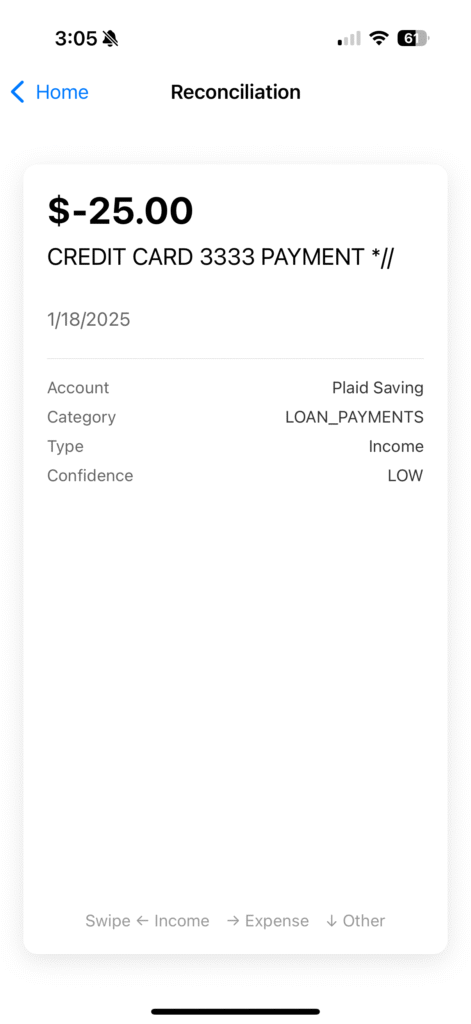
    • Intuitive Reconciliation Process: Any transactions that NetTrack’s AI can’t confidently categorize trigger an easy reconciliation process. On mobile, reconcile transactions quickly with a simple Tinder-style swipe interface.

    On desktop, manage reconciliations through an intuitive grid view.

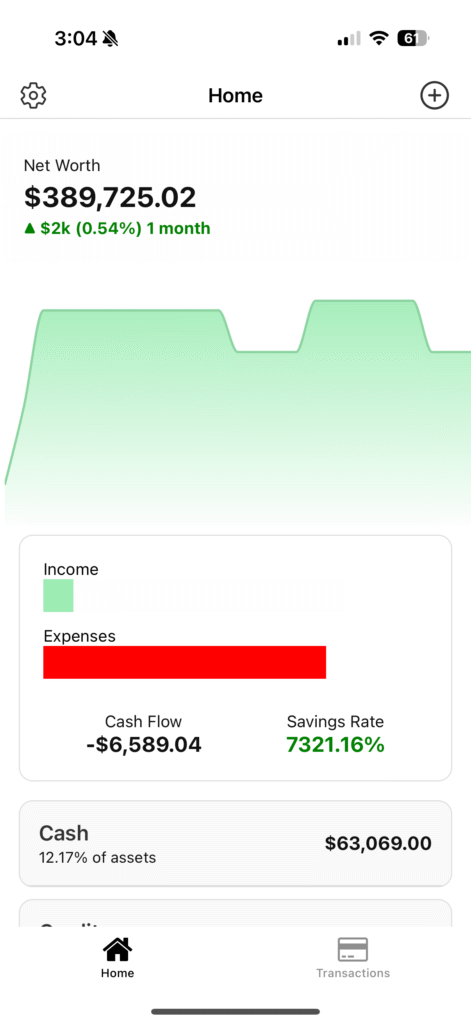
    • Visual Savings Insights: NetTrack provides clear visualizations of your cash flow and savings rate, allowing you to quickly understand your financial health and track your progress over time.

    Leverage the Power of AI to Optimize Your Finances

    By utilizing AI-driven categorization and intuitive user interfaces, NetTrack ensures accuracy in your savings rate calculation, empowering you to make informed financial decisions and achieve your goals faster.

    Take Control of Your Financial Future

    Calculating and optimizing your savings rate doesn’t have to be complicated. Let NetTrack handle the heavy lifting so you can focus on what matters most: growing your wealth and achieving your financial dreams.